
Ah, volume. That wonderful math concept that seems pretty simple—until your students start saying things like “Wait, is this area or perimeter?”
If you’re gearing up to teach volume and want your students to actually understand it, not just memorize formulas, this post is for you! Let’s break it down, keep it fun, and make sure your students walk away knowing that volume isn’t just something you turn up on a speaker.
What Is Volume?
Before your students start working on any volume problems, make sure your students know what volume actually is.
I know this sounds obvious, but students need to know (and have memorized) that volume is the amount of space a 3D object takes up. Solids and liquids are measured using volume, and students need to know by heart that the formula for volume is length x width x height.
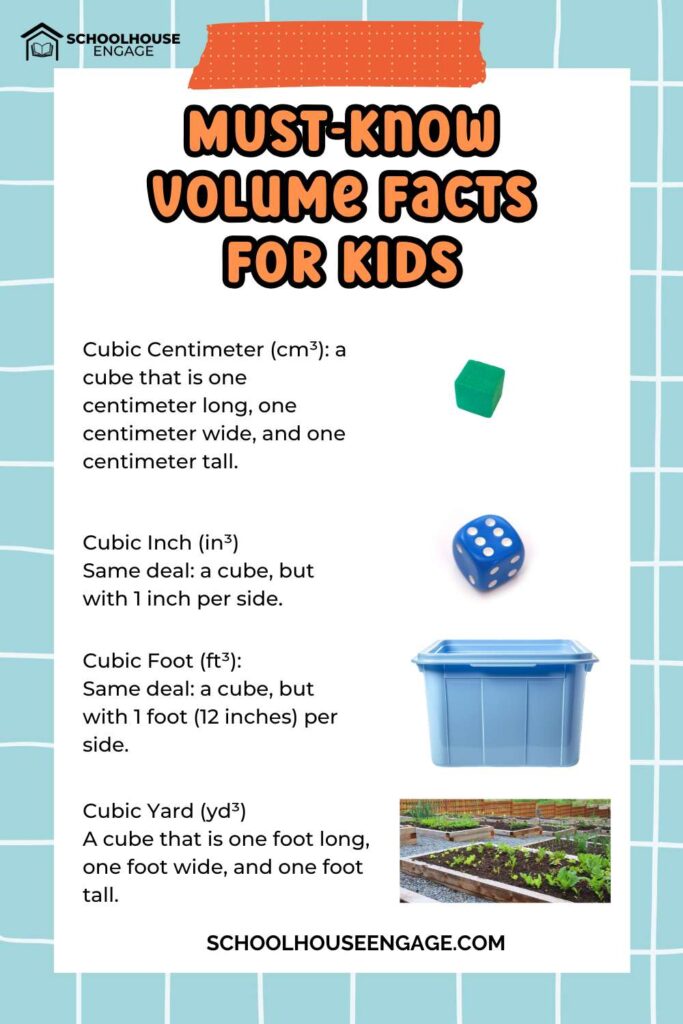
What is a Cubic Centimeter, Inch, Foot, and Yard?
Most students will hear “cubic centimeter” in math problems, and they need to be taught what it is exactly before they work on volume math problems. So give them some clarity.
Cubic Centimeter (cm³)
This is a cube that is one centimeter long, one centimeter wide, and one centimeter tall. You probably have some math manipulatives that measure a cubic centimeter. If not, an eraser tip is a good real-life example.
Cubic Inch (in³)
Same deal: a cube, but with 1 inch per side. Think of the size of a dice.
Cubic Foot (ft³)
A cube that is one foot long, one foot wide, and one foot tall. A plastic storage bin is a good example.
Cubic Yard (yd³)
This one is perfect for real-world connections. Think mulch, soil, or gravel—anything that is ordered by the truckload.
Teaching Volume with Real-Life Examples
Connect measuring volume to things your students already know:
- How much water fits in a swimming pool
- How much soil fills a raised garden bed
- How much sugar is in a container
Make it relatable!
Use Nets as an Activity for Volume Understanding
Students learn best with activities that are hands-on, and there is no exception when teaching volume. So that your students understand what volume is, they will need tactile practice of creating a rectangular prism with a net and placing cubic units inside it, and counting them.

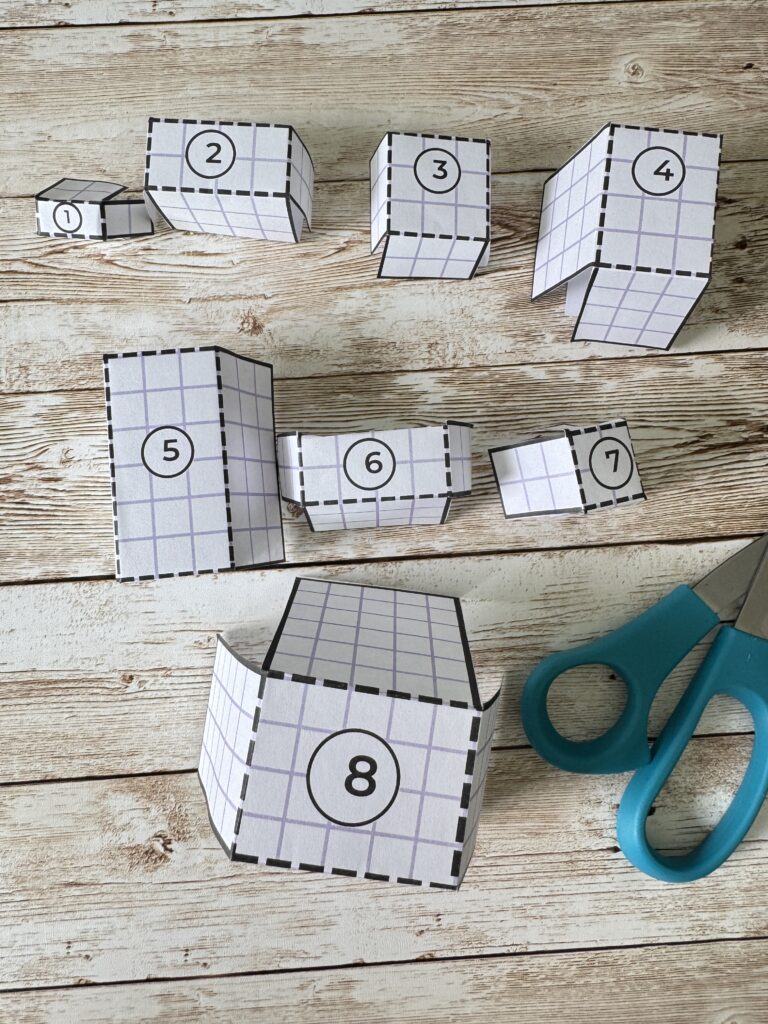
Teach what a net is and give your whole class the same net to work with, along with a recording sheet. You can find these nets HERE.
Have students cut and tape the net to form a rectangular prism. This helps them see and understand the volume formula. Provide centimeter cubes for students to actually fill up the space inside their prism.
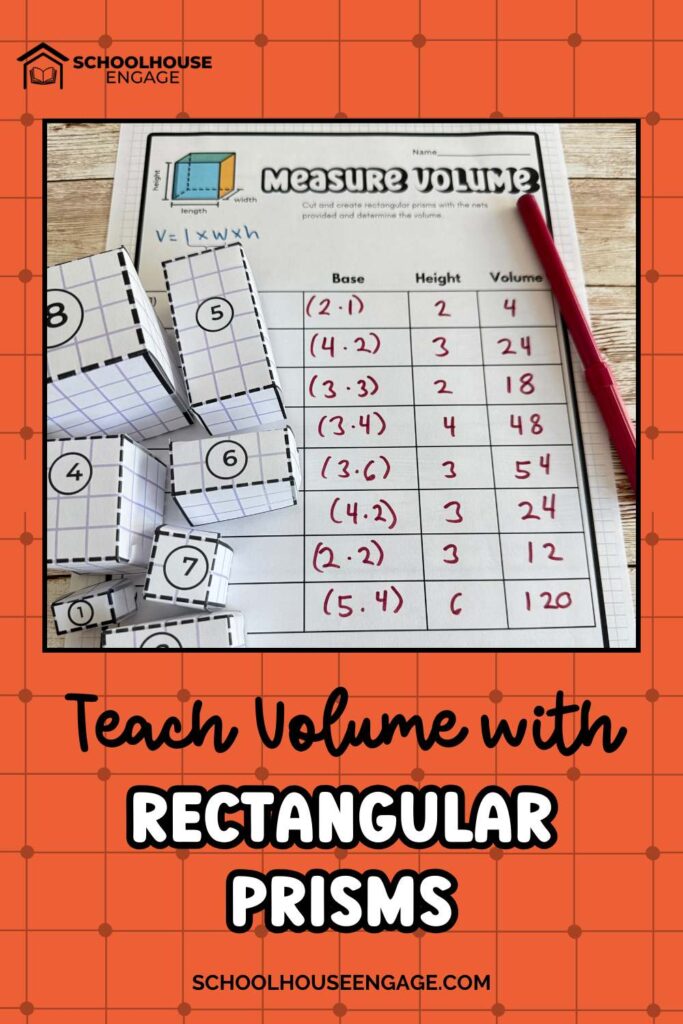
Ask them how many cubes are inside the prism and if they can think of a faster way to calculate the number of cubes inside.
Hopefully, you’ll have at least one student say they can multiply the first layer (length x width) by the height.
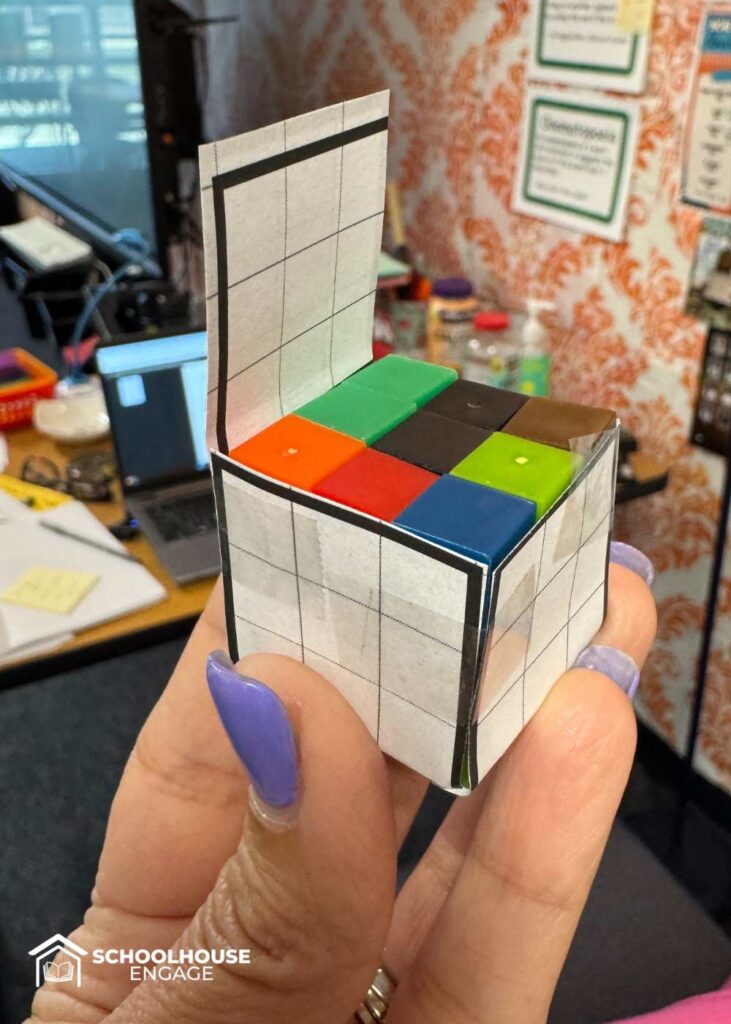
Teach Base x Height
Once the net is built, teach them that the base is length × width, and to find volume, we can multiply the base by the height.
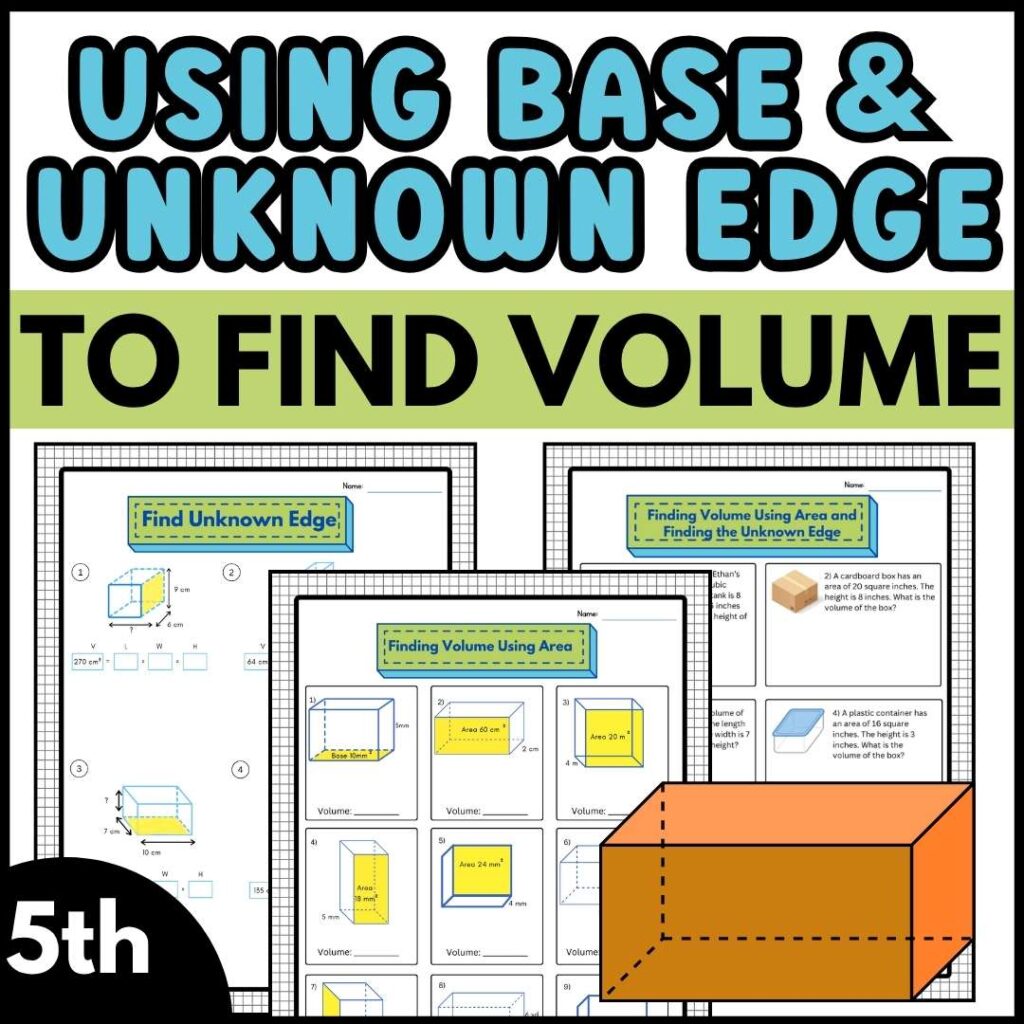
Word problems will often give students the area of the base and the height to find an unknown edge, so it’s crucial that they understand that the formula isn’t always given in L × W × H form. I’ve created worksheets to practice this specific skill that you can find HERE.
Set Up Volume Stations for Hands-On Practice
Here’s a fun way to get your students up and out of their seats after your class has built Net #1 together as an example:
1. Provide different nets for each group: Have each group build prisms for a second time with a different net and record the volume on their recording sheet. I label nets by number, so for example, only the red team will create rectangular prisms from net #5, and my blue team will create prisms with net #6.
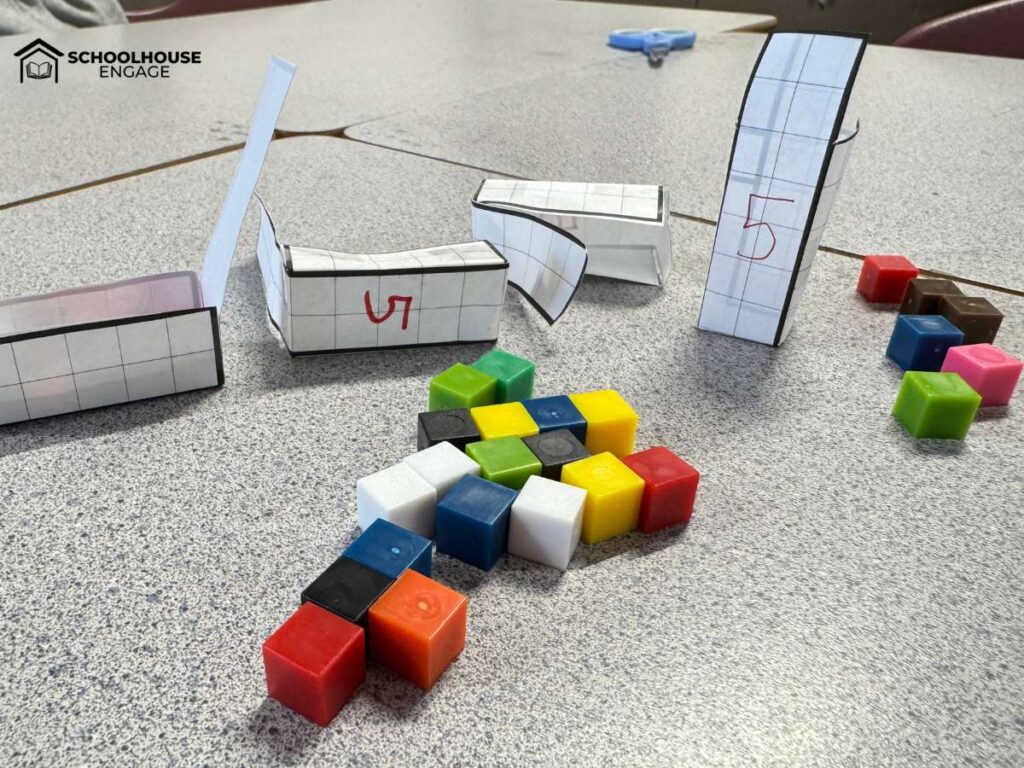
2. Rotate stations: Once students have completed their nets, they walk around the room solving for the volume of each prism and recording their answer on their recording sheet. Encourage students to compare answers.
3. Let Students Walk Around Freely: Let your students know that they don’t have to stick with their group. Once they calculate the volume for a prism, they should move on to solving another prism. Do not time the rotations, as some students will need more time than others to solve the problems.
4. Differentiate: Encourage students to use centimeter cubes if needed at each table so students can figure out volume by filling the prism, or they can solve it mentally by calculating the base × height.
5. Provide Early Finishers With Something to Do: Tell your students to sit down at their desks when they are done, so they are not wandering around chatting with classmates. Be sure to write some math review problems on the board that they can do to keep them busy.
6. Walk Around with Students: This is a great opportunity to help struggling students and to get a quick assessment of who is “getting” how to solve volume or not.
Go Over the Answers Together
When most students are done, go over the answers together. Use it as a chance to clear up misconceptions.
Save the Prisms for Next Year
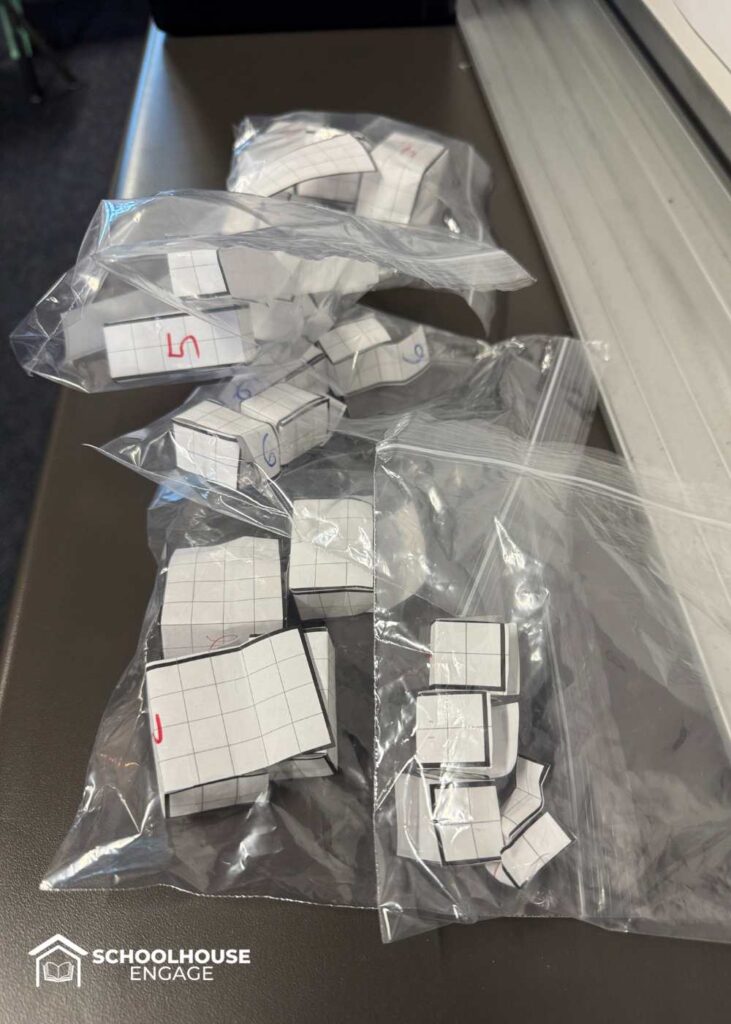
If you want to skip having students make the prisms and just jump right into filling up the prism with cubes, save them in plastic bags for next year.
Extension Activities
Measure Boxes to Find Volume
After the net activity, your students are now ready to do a more hands-on activity: finding the volume of containers by measuring with a ruler. Read more in detail in my blog post, “Hands-On Volume Activity Using Boxes,” and grab the free worksheet below.
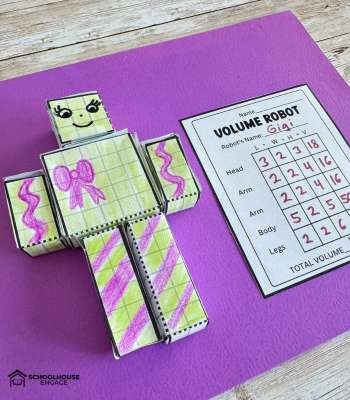
Build a 3D Robot!
Another extension activity is building a 3D robot. Check out my blog post on how to build a 3D robot out of paper rectangular prisms. It’s a fun project to apply volume skills and gives you some great classroom decorations while you’re at it.
Final Thoughts
Teaching volume doesn’t have to be boring. With some hands-on activities and relatable examples, your students will be volume pros in no time.
If you need Volume worksheets that teach students how to multiply the area or base by the height with problems that have unknown edges, check out my Volume Worksheets on Teachers Pay Teachers. It has everything you need to teach volume with visuals and word problems. You got this! Giselle