
If you’ve ever stood at your whiteboard trying to draw a halfway-decent anchor chart while your students slowly lose interest… you are not alone.
I’ve been there.
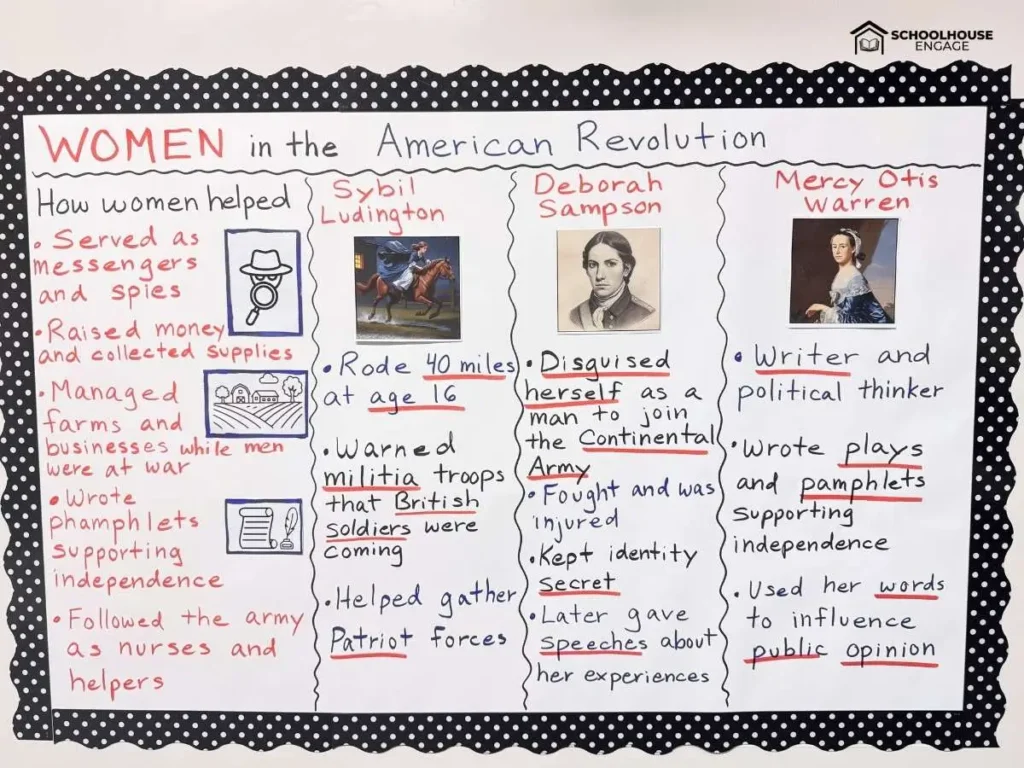
That’s exactly why I created this Women in the American Revolution anchor chart freebie—so you can focus on teaching, not sketching stick figures that are supposed to look like historical heroes.
Let me show you how to make this lesson engaging, meaningful, and super easy to prep.
Why Teach About Women in the American Revolution?
When we teach the American Revolution, it’s easy for the spotlight to stay on the major male figures. But it is important to introduce the roles women played, and if you can do it during Women’s History Month in March, even better!
I make sure that my students know that women:
- Rode through the night to warn soldiers
- Wrote powerful plays and propaganda
- Disguised themselves to fight in the war
It adds a whole new layer to your unit, and it naturally sparks curiosity and discussion.
A Simple (and Effective) Anchor Chart Lesson
Here’s how I like to run this lesson in my classroom:
Step 1: Build the Anchor Chart Together
Instead of pre-making the chart, I build it with my students.
Using the printable images from the freebie, I add visuals as we talk about each woman and her contributions. This keeps students engaged and gives them something concrete to connect to.
No drawing required. (Your future self will thank you.)
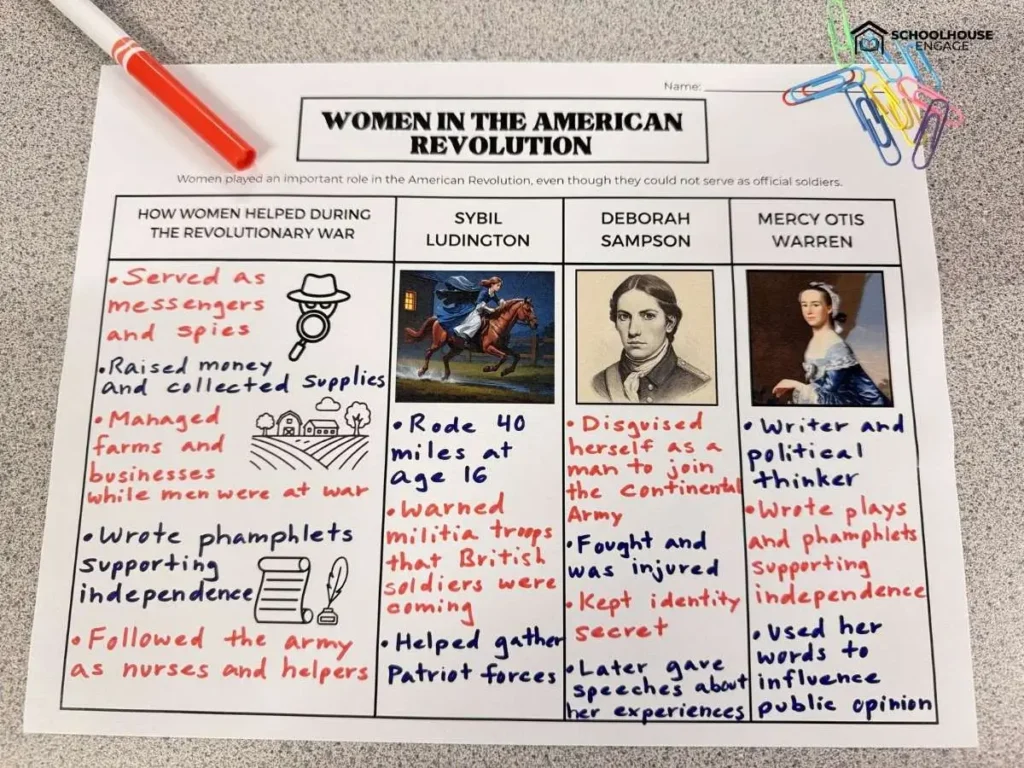
Step 2: Students Follow Along with Notes
At the same time, students complete their matching note pages.
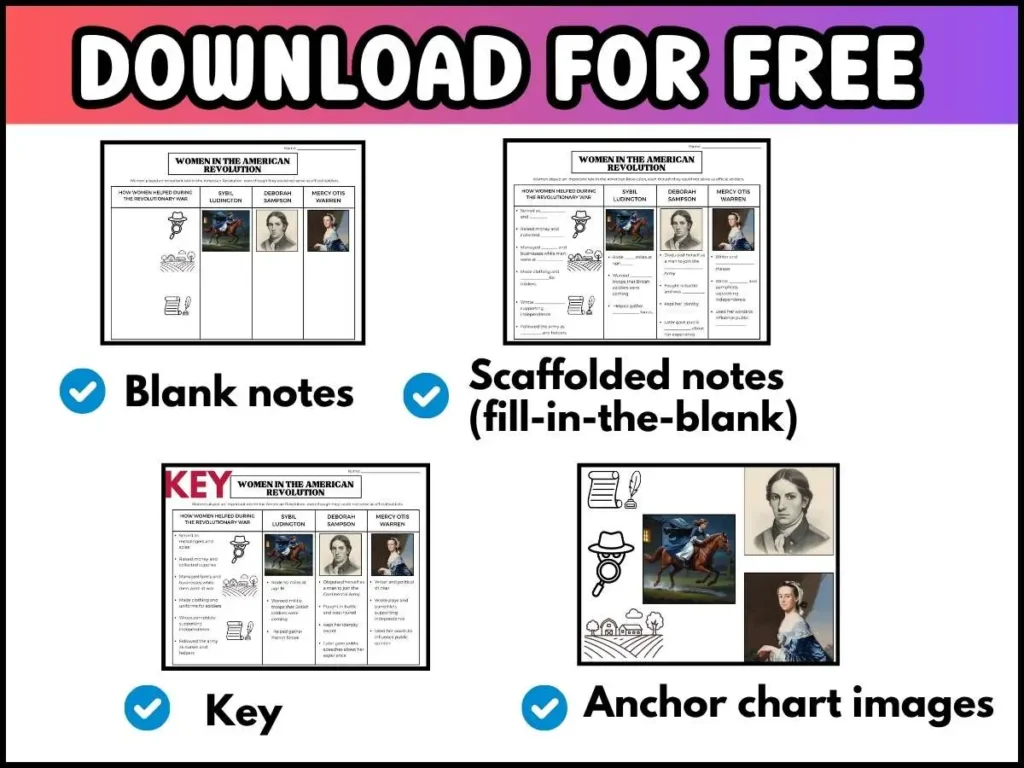
You’ll have two options:
- Blank version – great for on-level writers
- Fill-in-the-blank version – perfect for students who need a little extra support
This makes differentiation super easy without creating multiple lessons.
Step 3: Discuss and Connect
As you go, pause and ask:
- “Why do you think this was important?”
- “How would this have helped the Patriots?”
This turns the lesson from just note-taking into actual thinking and discussion.
Who’s Included in This Lesson?
This resource highlights three incredible women:
Sybil Ludington
Often called the “female Paul Revere,” she rode twice as far to warn troops of approaching British soldiers. Be sure to read more about Sybil Ludington in my blog post.
Mercy Otis Warren
A writer who used plays and poetry to influence public opinion and support the Patriot cause.
Deborah Sampson
Disguised herself as a man to fight in the Continental Army—yes, your students will think this is amazing.
Want to Make It Even More Engaging?
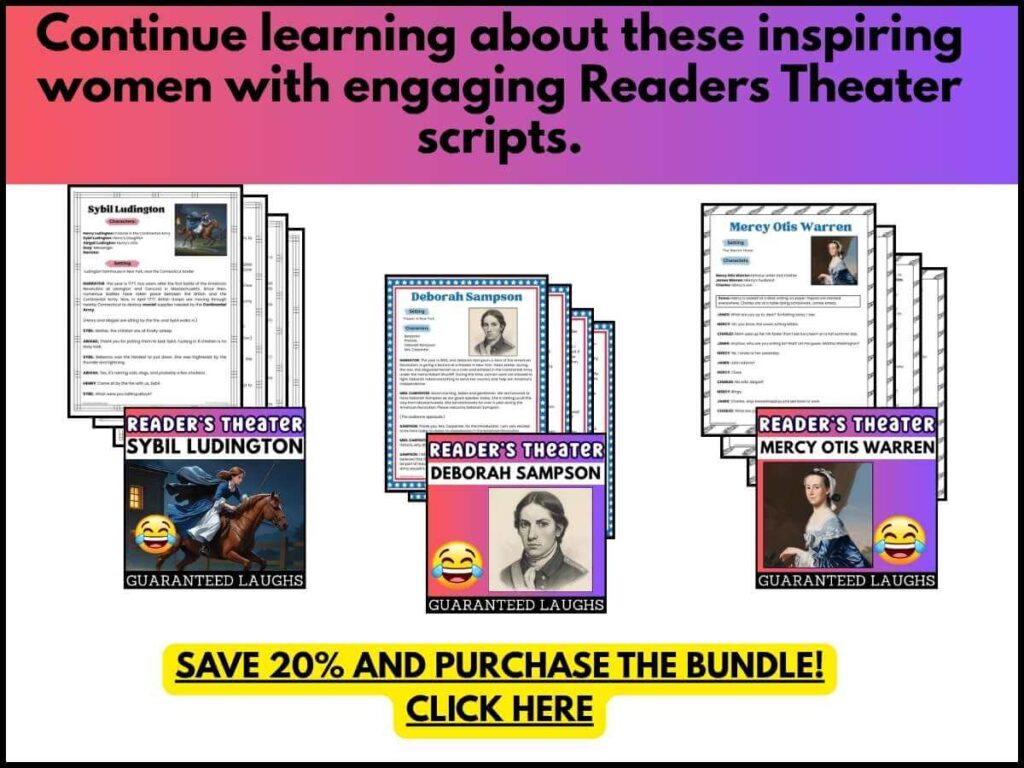
This anchor chart lesson is the perfect segue into learning more in detail about each women through Readers Theater.
Women of the American Revolution Readers Theater
After students learn about each woman, you can bring their stories to life through Readers Theater.
Students get to:
- Read the skit aloud in small groups
- Understand the contributions of women in the American Revolution
- Act out key moments
- Build fluency while learning history
And the best part? They’re actually excited about it.
The notes from this freebie line up perfectly with my Readers Theater scripts, so it feels like a natural extension of your lesson instead of “one more thing” to plan. They also frontload vocabulary which is so important for your English Learner students.
Save Time with the Bundle
If you end up loving this lesson (and your students will), I also have a bundle of all three Readers Theater scripts.
You’ll save 20% and have everything ready to go for a full mini-unit on Women in the American Revolution.
Grab the Freebie
If you want to make your lesson more interactive without adding extra prep time, this freebie is for you.
It includes:
- Anchor chart visuals (no drawing needed!)
- Differentiated student notes
- Content focused on key women of the American Revolution
Download the free Women in the American Revolution anchor chart below.
Final Thoughts
Sometimes the smallest changes—like adding visuals or giving students a structured way to take notes—make the biggest difference.
This is one of those lessons where students stay engaged, ask great questions, and actually remember what they learned.
And honestly… not having to draw everything yourself is just a bonus. You got this! Giselle