
If you’re teaching geography this year—whether in the classroom or at home—you already know how hard it can be for students to name and identify the continents, remember where the oceans are, or identify major countries.
Over the years, I’ve refined a routine that helps students retain what they have learned about geography by combining hands-on learning, visuals, vocabulary practice, reading fluency, and movement. Here’s exactly how I teach my geography unit from start to finish.
Step 1: Hook Students With Realia
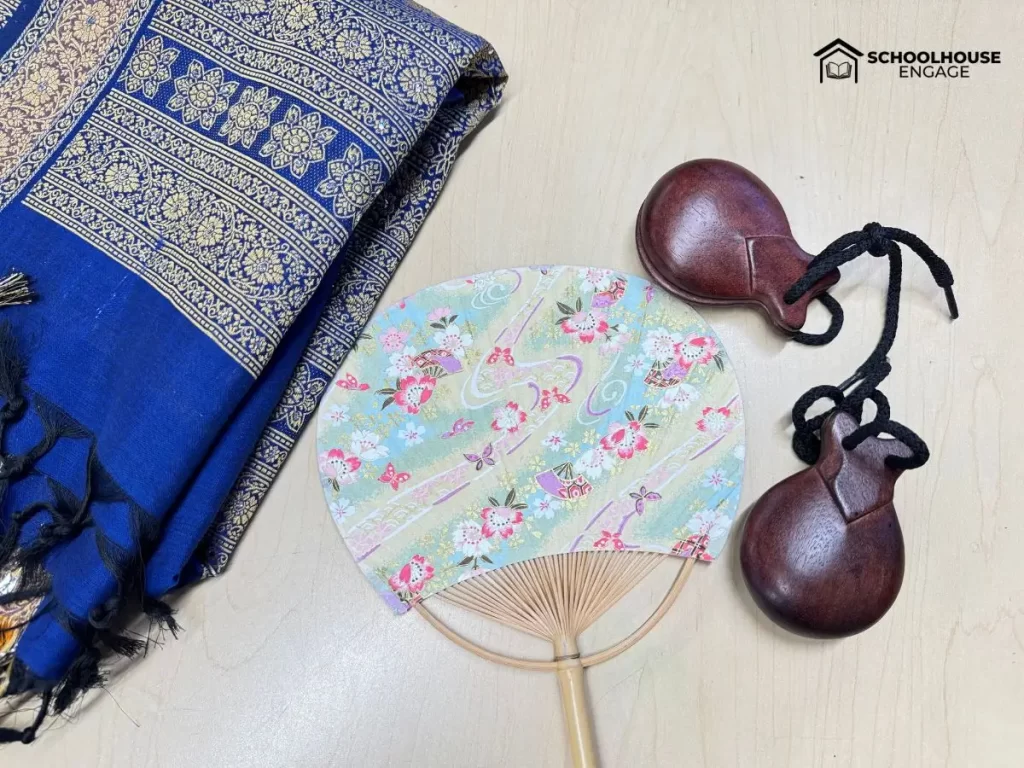
I always begin with realia—actual objects that students can hold and touch. I store a scarf from India, a fan from Japan, and Castanets from Spain, along with various other objects that I have collected over the years. Allowing students to touch these items creates instant engagement.
You don’t need to be a world traveler to do this; borrow from friends, ask families, or use souvenirs you have at home. The goal is simple: give students something concrete to connect to places that are out of the country.
Step 2: Teach With Slides + Guided Notes
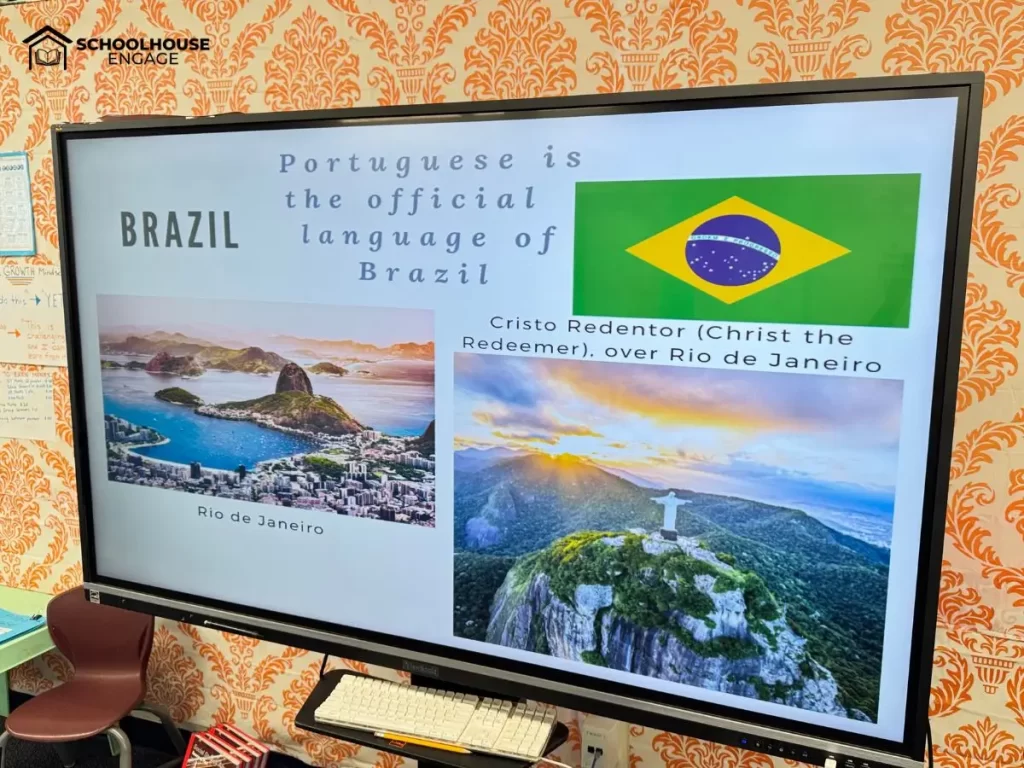
After capturing their interest, I move into my geography slideshow, which has real-life photographs, review questions, and guided notes. The slides introduce students to all seven continents, the major oceans, and well-known countries around the world.
These Geography Google Slides + Guided Notes include 54 slides with photos, three sets of guided notes, and quick-check quiz slides for review. Students follow along using their notes, which keeps them accountable and engaged throughout the lesson.
Step 3: Introduce Geography Vocabulary With Picture Support
Once students have a general overview, we build a class vocabulary chart. I write kid-friendly definitions for words like “continent,” “hemisphere,” and “equator,” and pair each with a simple drawing.
Every day, we revisit the chart using turn-and-talk, sentence practice, and random popsicle-stick calling questions. This daily repetition helps students remember academic vocabulary long before we read the textbook.
Step 4: Practice Reading Multisyllabic Geography Words
Before students ever crack open their Social Studies books, I want them comfortable reading and pronouncing all those big geography terms. This is where Geography Fluency Task Cards come in.
These cards (32 total) include short passages, picture support, and multisyllabic words highlighted for decoding practice. Students read them in partners, small groups, or independently, and the cards also come with a frontloading word list and a Google Slides version for digital practice.
By this point, students recognize words like “hemisphere,” “equator,” and “continent” and can decode them easily, which pays off big when we get to reading the textbook.

Step 5: Read the Social Studies Textbook
Now that vocabulary and fluency are in place, students are finally able to read from their Social Studies books. Because they’ve already heard, spoken, read, and reviewed the big words, comprehension comes naturally. Most of my students will read frustration-free because we frontloaded a lot of the vocabulary.
Step 6: Color-by-Answer Geography Review
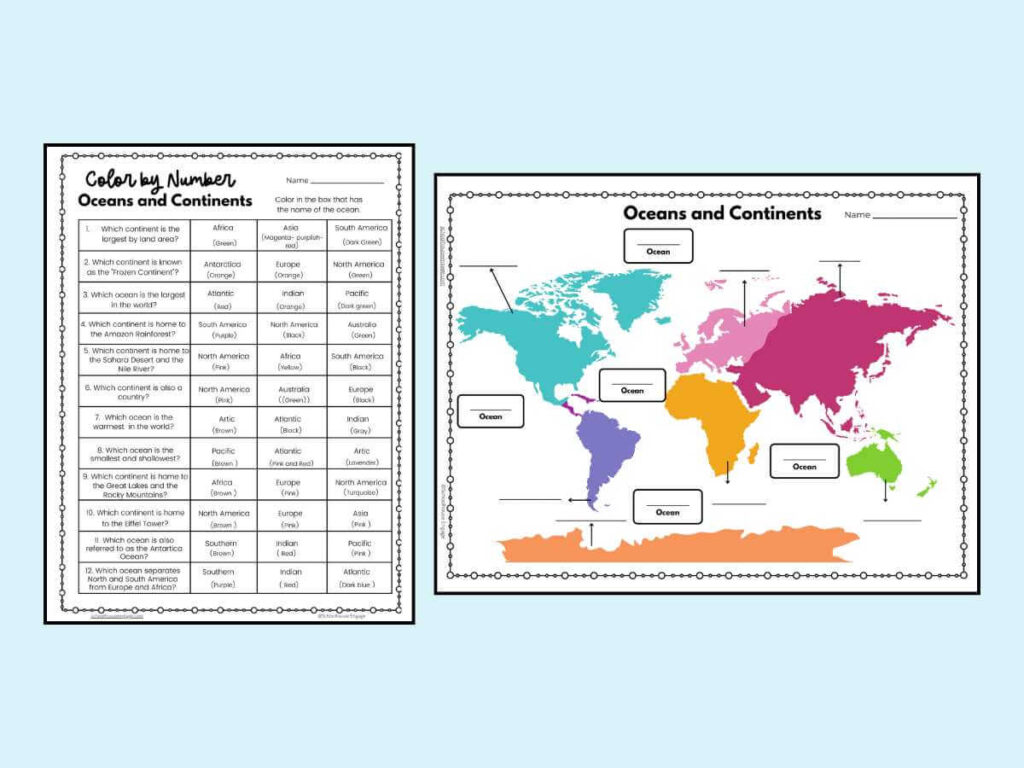
Next, students complete a color-by-answer worksheet to review continents and oceans. This Continents & Oceans Color-by-Answer Worksheet includes 12 review questions, a map to color, and an answer key.
It’s quick, quiet, and perfect for reinforcing geography knowledge without overwhelming students. You can get the resource here.
Step 7: Write the Room Geography Activity
Once students have the basics down, I get them up and moving with a Write the Room activity. I hang geography question cards around the room, and students walk around with a partner and a recording sheet. They use their guided notes to answer each question, which gets them talking, thinking, and applying vocabulary authentically.
These cards can also be used as a Scoot game or in centers. I use these Write the Room Geography Cards, which include 24 question cards with visuals, editable text, and a recording sheet. You can find them here.

Step 8: Quiz Day
At the end of the unit, students take a simple quiz on the continents and oceans. This might seem basic, but this knowledge becomes the foundation for everything they’ll learn later—from European Exploration to Colonization to the American Revolution. Knowing where places are on a map helps students make sense of world history in a much deeper way.

Final Thoughts
Teaching geography doesn’t have to feel like endless memorization. When you incorporate hands-on objects, engaging visuals, vocabulary practice, reading fluency, and movement, students truly understand what geography is all about.
These steps have transformed my geography unit into one of the most engaging parts of the year, and I hope they help your students build the same level of confidence and understanding.
Be sure to read, Engaging Continents and Oceans Lesson Plans for Elementary Teachers