
Teaching writing in general can feel overwhelming, especially when students struggle to organize their ideas. Add the challenge of covering a scientific topic like severe weather, and it’s easy to see why this writing skill can be tough to teach.
Over the years, I’ve created a step-by-step approach to make writing essays fun, engaging, and easy to teach. In this post, I’ll share my strategies to help your students master this important writing skill while integrating Science.
Why Integrating Science in Writing is Essential in 5th Grade
Teaching students to write essays based on a scientific subject boosts critical thinking and improves writing fluency. It also prepares them for the SBAC Writing Performance task, which requires them to read articles and use the information in an essay. Many students practice writing informative essays on scientific topics, but SBAC will give them a text-based prompt.
Their task will be to create a story based on what they learned in an expository article. They are also required to make connections to source materials to enhance the narrative, which means they need to use some domain-specific vocabulary, which we call topic vocabulary in my classroom.
Integrating any Science topic into your writing lessons helps to address the following standard: Use precise language and domain-specific vocabulary to inform about or explain the topic. Emphasize to students that when they write, they need to incorporate domain-specific vocabulary.

Writing essays with a scientific theme helps students:
✅ Deepen Understanding of Scientific Concepts
✅ Encourages Creativity While Reinforcing Facts
✅ Prepare for more advanced writing in middle school
✅Strengthens Writing and Critical Thinking Skills
✅Increases Student Engagement
However, many students have a hard time structuring their essays. Your struggling writers and EL students will need a lot of support and examples. That’s why modeling the writing process and breaking it down into manageable steps is so important.
In this post, I’ll share the steps I used to help my students write a narrative essay about being in a hurricane, tornado, or blizzard.
Step 1: Brainstorm and Organize Ideas
Read about Severe Weather
Before students write, they need to gather key information about severe weather. At this point, students have already read an article about hurricanes, tornadoes, and blizzards and have taken notes on the main idea and details of these severe weather occurrences. You can find the article and the graphic organizer to take notes HERE.

Brainstorm Problems Involving Severe Weather
We use Thinking Maps at my school district, so we start with a circle map, which is a map to brainstorm related ideas.
All great stories have a problem, so we brainstorm problems that occur during severe weather. I just have my students use a blank sheet of paper to create their circle map.
Below is an example.

Organize Events in a FLEE Map or Graphic Organizer
I model how to complete a graphic organizer for surviving a tornado. We use a FLEE map, which is a combination of a Flow and Treemap.
As you teach, walk around while students complete their FLEE map to make sure they are only writing key phrases or words. If not, I guarantee you’ll have students writing long sentences as if they are already starting their essays.
Remind students that sentence writing comes when they actually write their essay on the computer.
As I write key phrases and words on a chart, they do the same on their paper. They look over the severe weather article for ideas on what to include, and students give me ideas on what should be included in the narrative essay.
Step 2: Using a Mentor Text to Explain Expectations
Providing examples of a stellar essay is a game-changer because students will know what they are expected to write about. Providing your students with an example allows them to see what a strong response looks like.
The example I provide is interactive since students have to highlight and underline different parts of the essay. Students need to highlight topic sentences in yellow and circle transition words. This brings attention to what needs to be included in their writing.
You can use old essays from previous students or create your own. Or save time and use my resource, which includes a full-length example essay for students to analyze!

Step 3: Structure the Narrative Essay with an Outline
Now that students have organized their ideas on the FLEE map and read a student example essay, it’s time for them to use their FLEE map or graphic organizer to create an outline. I teach them this simple format:
Introduction:
Grab your audience’s attention by describing the scene and by giving background information by explaining:
- Who were you with
- Where you were
- When the event happened
- What were you doing
Body Paragraphs:
- A challenge or obstacle you face during the storm.
- A resolution—how you handled or overcame the situation.
Conclusion:
- A reflection on what you learned from the experience.
- Why will you always remember that day
Step 4: Support Your Struggling Writers
Oftentimes when my students are writing essays, they either write as minimally as possible or they truly don’t know what it is they want to say. This is where writing an outline is helpful.
Having students write a rough draft in an outline format helps students with writer’s block and organize their thoughts. I let students know that their outline is not the final essay and that they are just going to copy it down when doing their final draft.
They know that after they write their outline, they will have the opportunity to add more sentences and information.
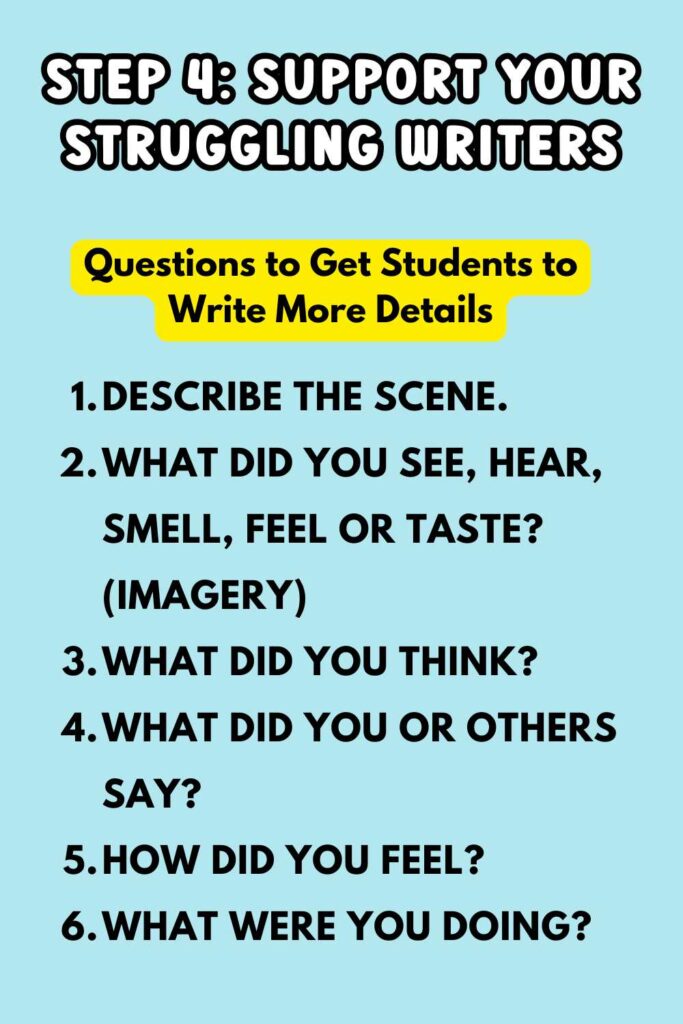
If you get blank stares when you tell students they need to write more details, here are some questions that can get your students to write more that are included in the outline.
Questions to Get Students to Write More Details
- Describe the scene.
- What did you see, hear, smell, feel or taste? (Imagery)
- What did you think?
- What did you or others say?
- How did you feel?
- What were you doing?
You can read more about supporting students in writing in my blog post: Best Strategies for Teaching Narrative Writing to Struggling Students.
Step 5: Add Creativity and Engagement to Writing
Many students do not like to write, so every time they complete any type of essay, I try my best to add something fun to their writing by incorporating some drawing or coloring.
So once students are done with their final draft, they get to personalize their assignment by choosing a coloring cover sheet for their essay. Before I print, I show my students their options for their cover sheet. Then I take a head count of who wants what cover, so I know how many copies I need to make.
If they’re writing their essay by hand, they can use stationery coloring sheets for their final draft. I know writing by hand is a lost art, but it’s making a comeback due to teachers trying to bypass AI and the poor quality of student penmanship.
Reasons to use coloring cover sheets:
- Adds a creative touch to the writing process
- Makes bulletin board displays look amazing
- Helps students take pride in their work and allows for student choice
(With three different cover sheet designs, students can make their writing unique!)

Step 6: Using a Student-Friendly Rubric to Make Grading Easy
Grading any type of student essay can be time-consuming, especially when you find yourself writing the same comments over and over for each student. That’s why using a student-friendly rubric with a built-in checklist will save you time!
Two Versions to Fit Your Needs
This resource includes two rubric options so you can choose what works best for your classroom:
✅ One-Page Rubric– Perfect for easily reading and assessing each category.
✅ Half-Page Rubric (Two Per Page): Saves paper while still providing clear grading criteria.
Checklists for Quick, Meaningful Feedback
Each rubric comes with an editable student-friendly checklist that allows you to quickly mark areas where students did well and where they can improve. Instead of writing the same positive comments for every student, simply check off items like:
- Well-organized ideas
- Strong evidence with examples
- Great use of transition words
For areas of improvement, the checklist provides specific suggestions that help students revise their writing, such as:
- Capitalize proper nouns
- Add transition words
- Add figurative language
How This Saves You Time
Instead of spending hours writing out the same feedback, you can check off comments that apply to each student’s work. This allows you to:
✅ Give high-quality feedback in less time
✅ Ensure students understand what they did well
✅ Provide clear, actionable ways for them to improve
Students thrive on feedback and do better on their assignments when they get immediate feedback. Using this rubric and checklist system makes grading faster, easier, and more consistent, while also helping students take ownership of their writing growth.
Make sure to provide a copy of this rubric so that students know exactly what is expected of them before they compose their essays.
(Want to streamline your grading process? This Severe Writing Resource includes these rubrics and checklists to make your life easier!)
Make Narrative Writing Easy to Teach!
Narrative essays don’t have to be stressful! With the right strategies and resources, students will gain confidence in their writing while deepening their understanding of severe weather.
For more about how to help struggling writers, read my other blog post, Step-By-Step Narrative Writing Lesson Plan for Struggling Students.
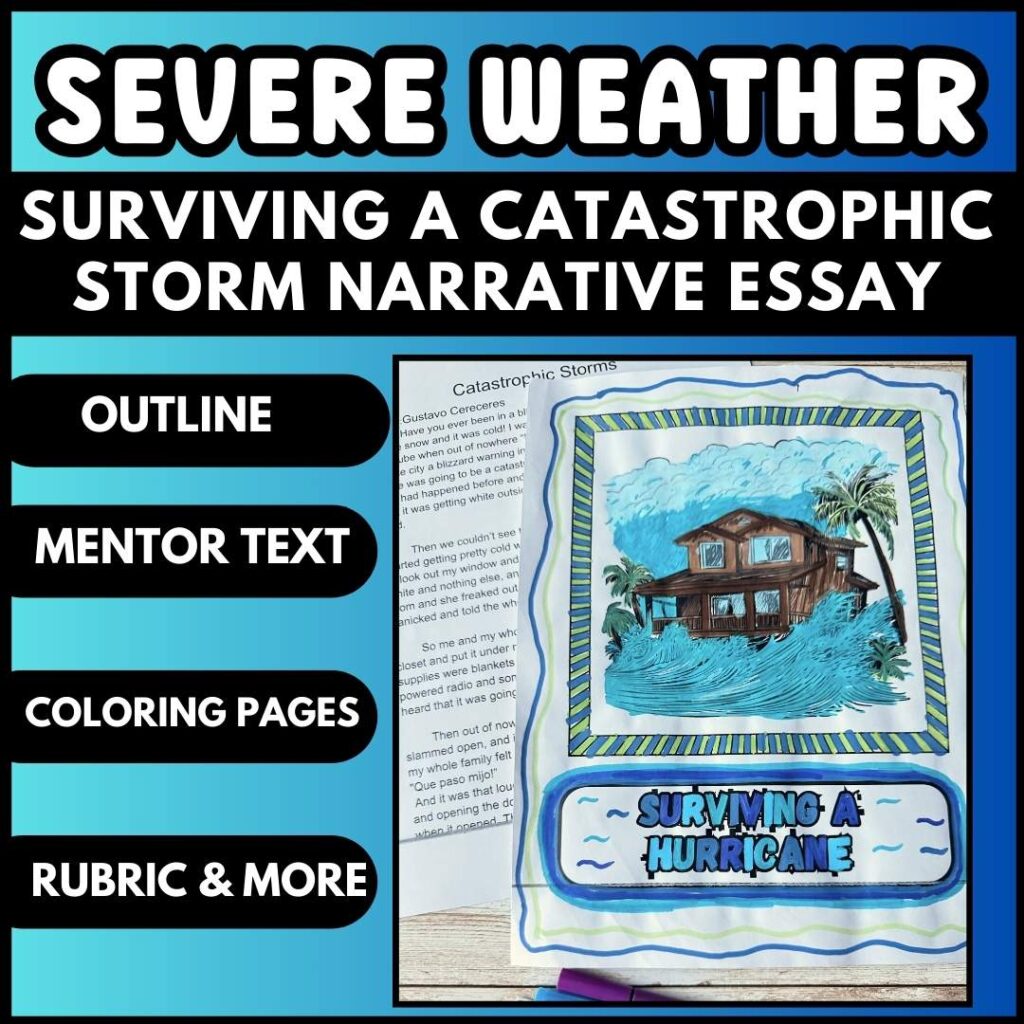
If you want a ready-to-use lesson that includes brainstorming tools, student examples, outlines, rubrics, and creative cover sheets, check out my Severe Weather Writing Resource HERE. It’s the perfect resource for teaching severe weather and narrative writing techniques in a fun and structured way!