
The first week of school sets the tone for the entire year. Between organizing supplies, learning names, and managing excitement, it’s easy for routines and expectations to get overlooked. That’s why I love doing our PBIS classroom expectations back-to-school Bingo game.
This school year, I wanted to change things up and do the activity later during the first week of school instead of on day one. And… that lasted for one day.
After a few hours into the first day of school, I kid you not, I had two students testing the waters—tapping desks, shouting out “funny” comments mid-lesson, and talking excessively while walking in line during lunch. Clearly, we needed to pause and set expectations right away.
So I decided that we needed to do a lesson on classroom expectations and rules ASAP. Students learn best when they actively participate in an activity, so instead of asking students for ideas on classroom expectations and writing them on chart paper like I’ve done in the past, I wanted them to have more accountability.
PBIS Framework for Classroom Expectations
Since my school uses PBIS Positive Behavioral Interventions and Supports, I built the lesson around that model. Don’t worry—if your school doesn’t use PBIS, you can still use this activity with no problem. Our school’s motto is Be Ready, Be Respectful, Be Responsible)
This is how I ran the lesson…
How to Teach Classroom Expectations with a Bingo Game
Step 1: Partner Work with Drawings and Lists
I paired students up and asked them to draw what it looks like to be ready, respectful, and responsible. Alongside their drawings, they made a quick list of what students should say and do to show those traits.
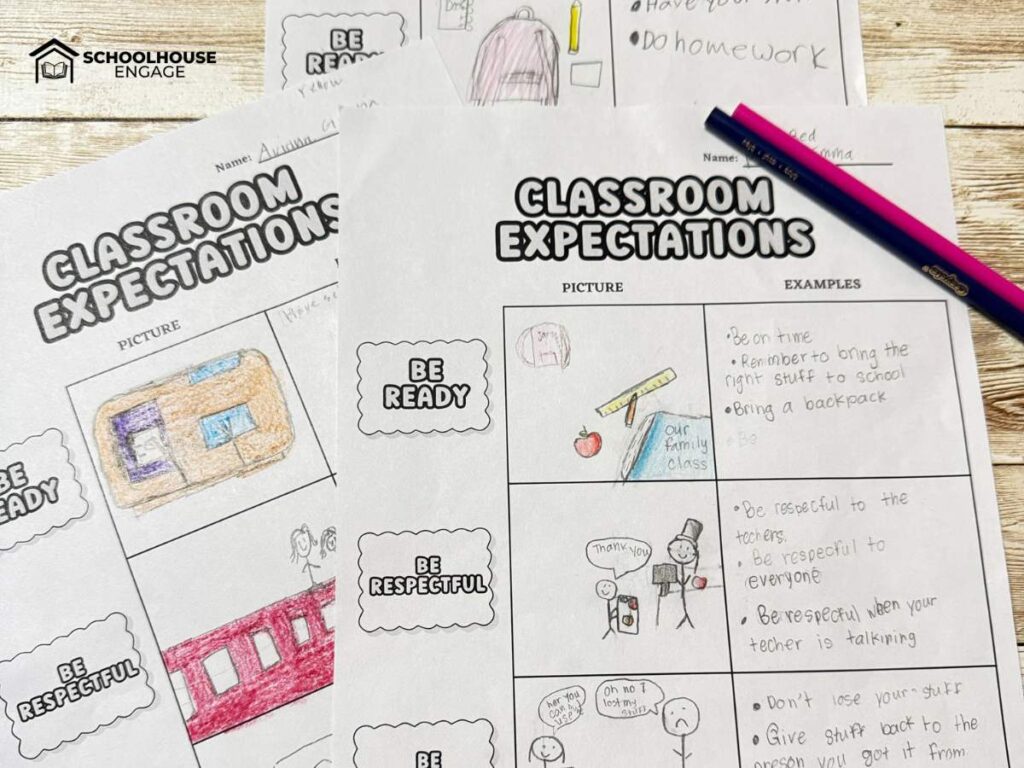
About five minutes in, I noticed one partner was doing all the work (classic). To fix this, I had them pass the paper back and forth—one drawing, one writing—so both students stayed engaged.
Step 2: Set Up the Bingo Board
Next, I collected the papers and handed out Bingo sheets with nine blank squares. I asked students to fill in each square with words they thought I’d say while reading their examples aloud.
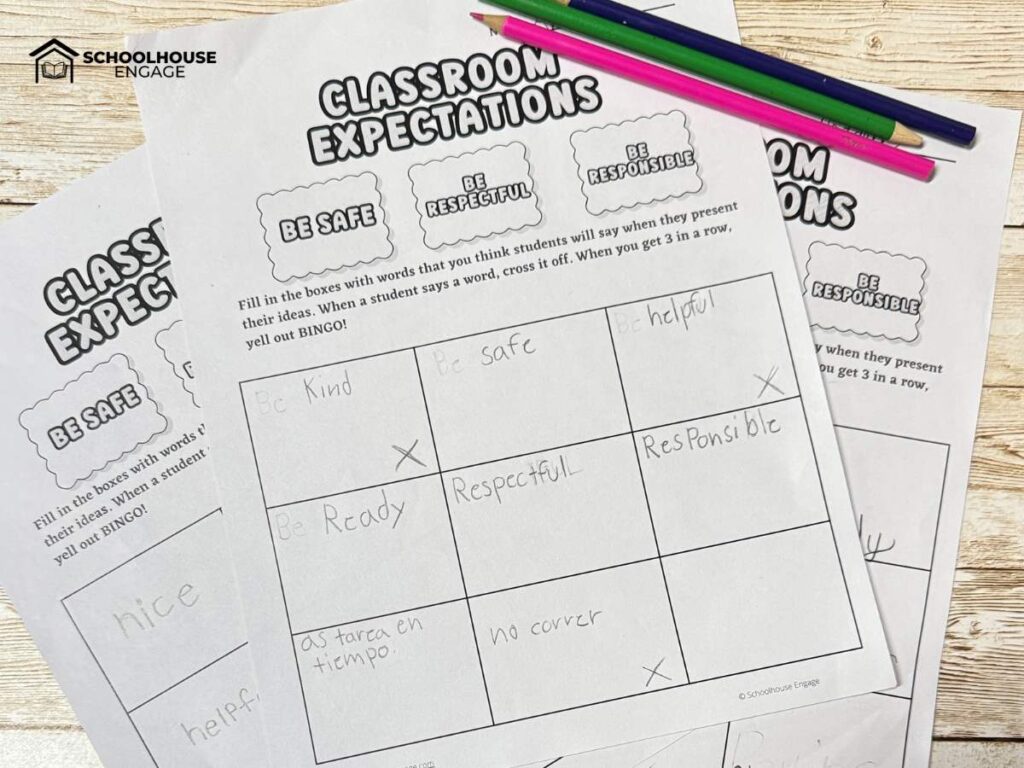
Step 3: Play Bingo While Reviewing Expectations
As I read students’ examples of being ready, respectful, or responsible, the class crossed off any matching words on their board. When they got three in a row, they shouted “Bingo!” (loudly, but joyfully).
Teacher tip: This Bingo listening game works for more than just rules—it’s an easy way to keep kids tuned in during read-alouds, vocabulary practice, or review sessions.
Step 4: Create a Classroom Anchor Chart Together
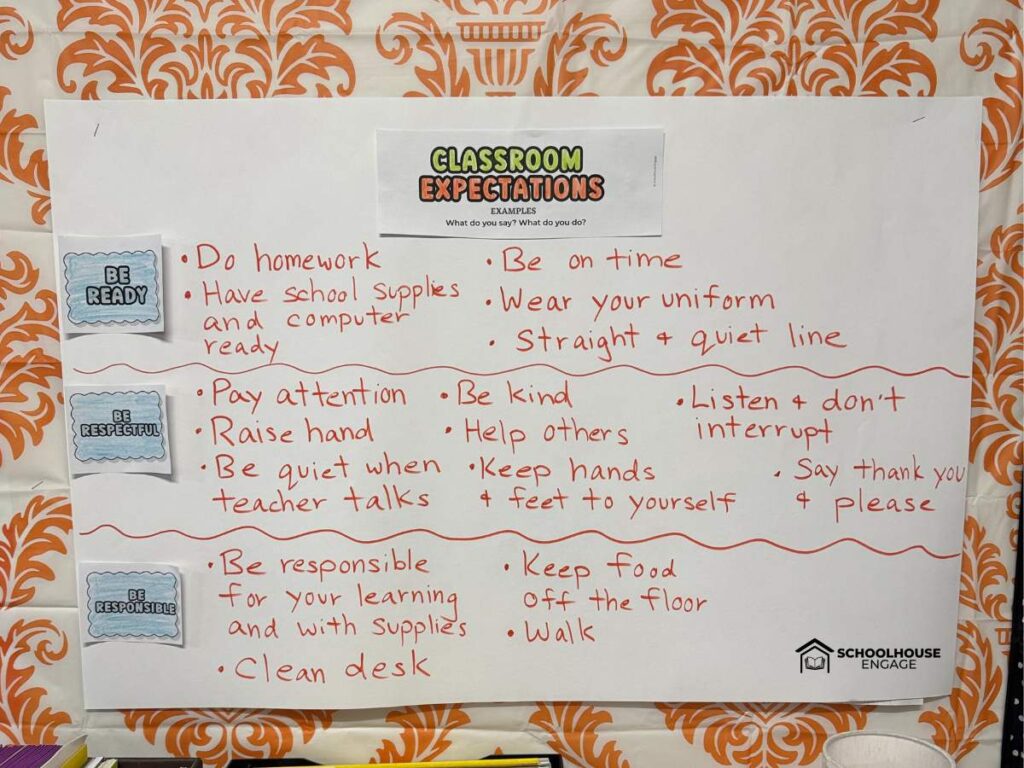
While I read student examples, I wrote them down on chart paper so we can revisit them all year long. By no means is this the only expectation anchor chart I have in my room. We have one for how to behave during the morning and when we pack up.
Why Bingo Is the Perfect Classroom Management Tool
This activity works because it gives students ownership over the rules instead of just hearing them from the teacher. They’re drawing, writing, listening, and playing a game—all of which keep them engaged and accountable. It’s one of those simple, low-prep strategies that encourages active learning while students think they’re just playing a game.
Bingo adds a game-based learning element that encourages participation from all students—even the quiet ones. It transforms reviewing expectations into an active listening challenge. Students aren’t just hearing the rules—they’re processing, matching, and responding, which leads to better retention.
This turned out to be a quick and easy way to review rules and keep students engaged. You can certainly do this lesson with blank paper, but if you want everything neat and tidy, you can get the templates HERE.
Teaching expectations doesn’t have to be a lecture. When you turn it into a game, you set a positive tone for the year while building community.
If you’d like ready-to-use templates with Bingo boards and reflection pages, I created a printable version that makes setup quick and easy. You can grab it here or find it in my Teachers Pay Teachers store.
Try PBIS Classroom Expectations Bingo this week and watch how quickly your students take ownership of their behavior! You got this! Giselle