
Teaching continents and oceans in upper elementary is a must-do. A few times I’ve asked my students what country and state we live in, and I get responses like, “We live in the country of California and the continent of Mexico.” I’m dead serious! (I teach in Southern California.
When I heard this, I knew it was time to get VERY serious about how I teach geography. These type of misconceptions show why structured, engaging geography lesson plans are essential.
Just reminding students and asking them geography questions from time to time is not enough. It doesn’t happen through osmosis. Geography knowledge only happens with hands-on, engaging activities.
Why Teaching Continents and Oceans Matters in Upper Elementary
Upper elementary students need fun and interactive geography lessons. It’s the foundation of Social Studies. I found that students learn about the oceans and continents when it is in context.
So just don’t have students memorize a list of names. I guarantee they will forget it. Make geography meaningful!
How to Teach Continents and Oceans in Upper Elementary
Teaching your students basic geography does not have to take a long time. You can easily teach it in a week. Here are some simple ideas to get you started.
#1 Use Real-Life Images of Countries in the Continents
My go-to way to teach students about continents and oceans is to show colorful, real-life images of some of the countries within the continent. I choose pictures that are colorful and vibrant, like the one below.
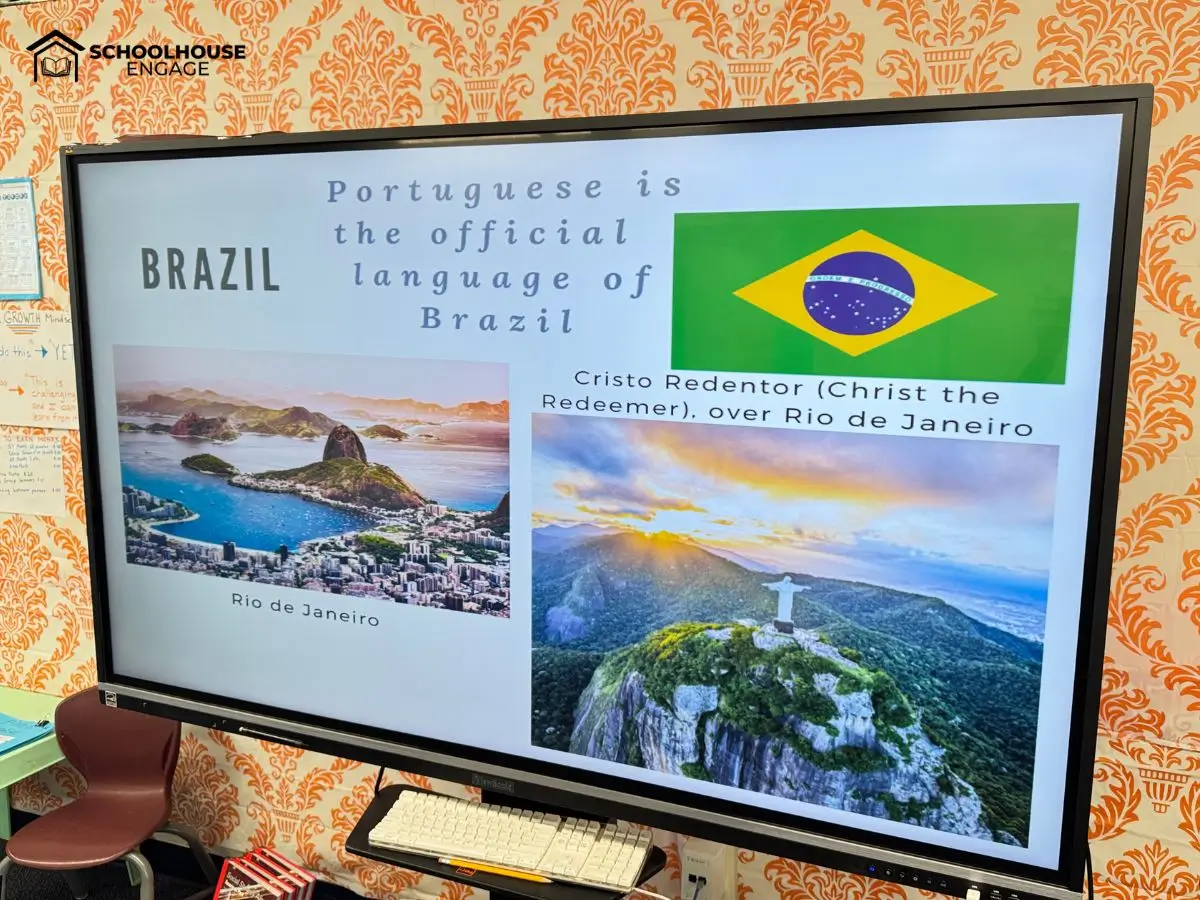
Students need to see images of these countries with iconic symbols and places of interest. These images start some real conversations about the culture of the people and current events.
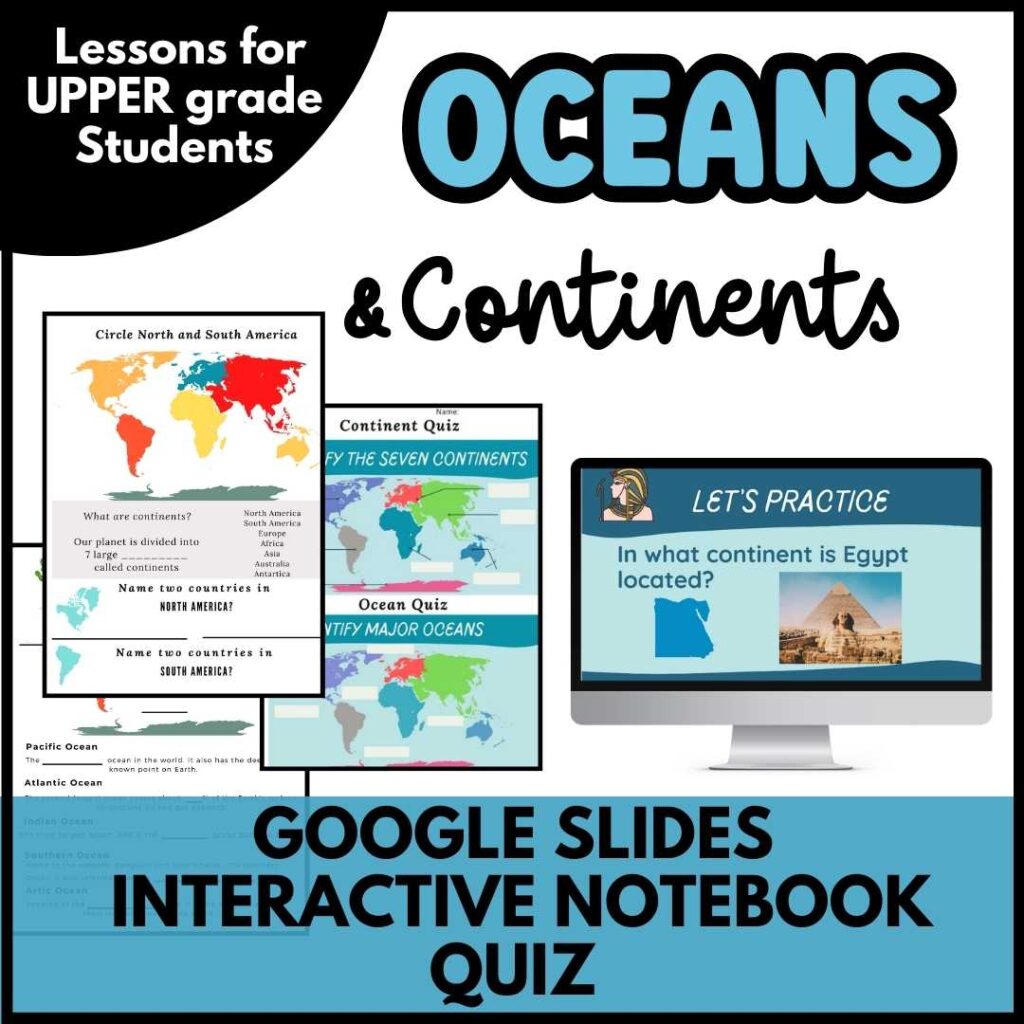
Don’t want to deal with the hassle of creating a Google Slides Presentation and guided notes. I’ve done the work for you! Grab the lesson HERE.
If you have traveled outside of the country, show your pictures to students. Bring in souvenirs if you have them. I was given a scarf from India by a friend who went there, and I always show it to my students, along with castanets from Spain and a fan from Japan.
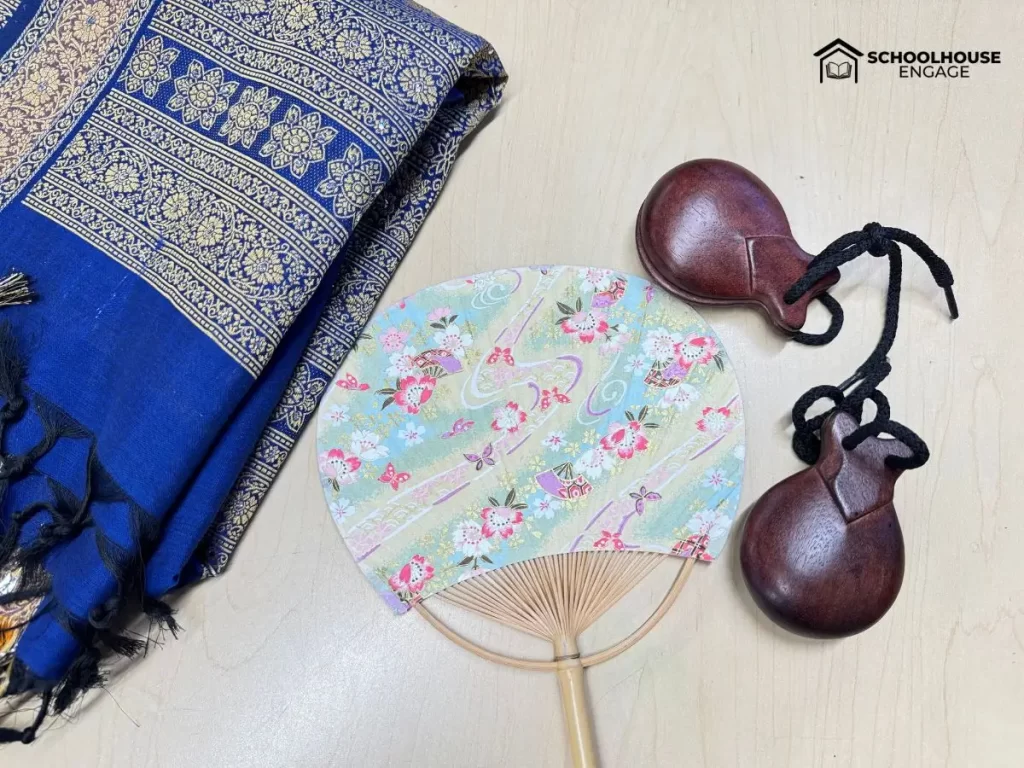
Kids love to see and touch things. If you have anything extra special, be sure to place it in a ziplock bag before passing it around.
Not only will sharing your travel experiences inspire your students to one day visit these places, but you will build that personal connection with your students that is so important.
#2 Focus on Key Countries and Oceans
There are so many countries within some of the continents. It’s not worth the time to go into depth on too many countries. I just focus on popular and recognizable countries that are travel destinations that most students may have heard about.
Here are the countries we focus on:
North America: Canada and Mexico
South America: Brazil and Peru
Europe: France and Italy
Africa: Egypt and Tanzania
Asia: India, China, and Japan
Australia
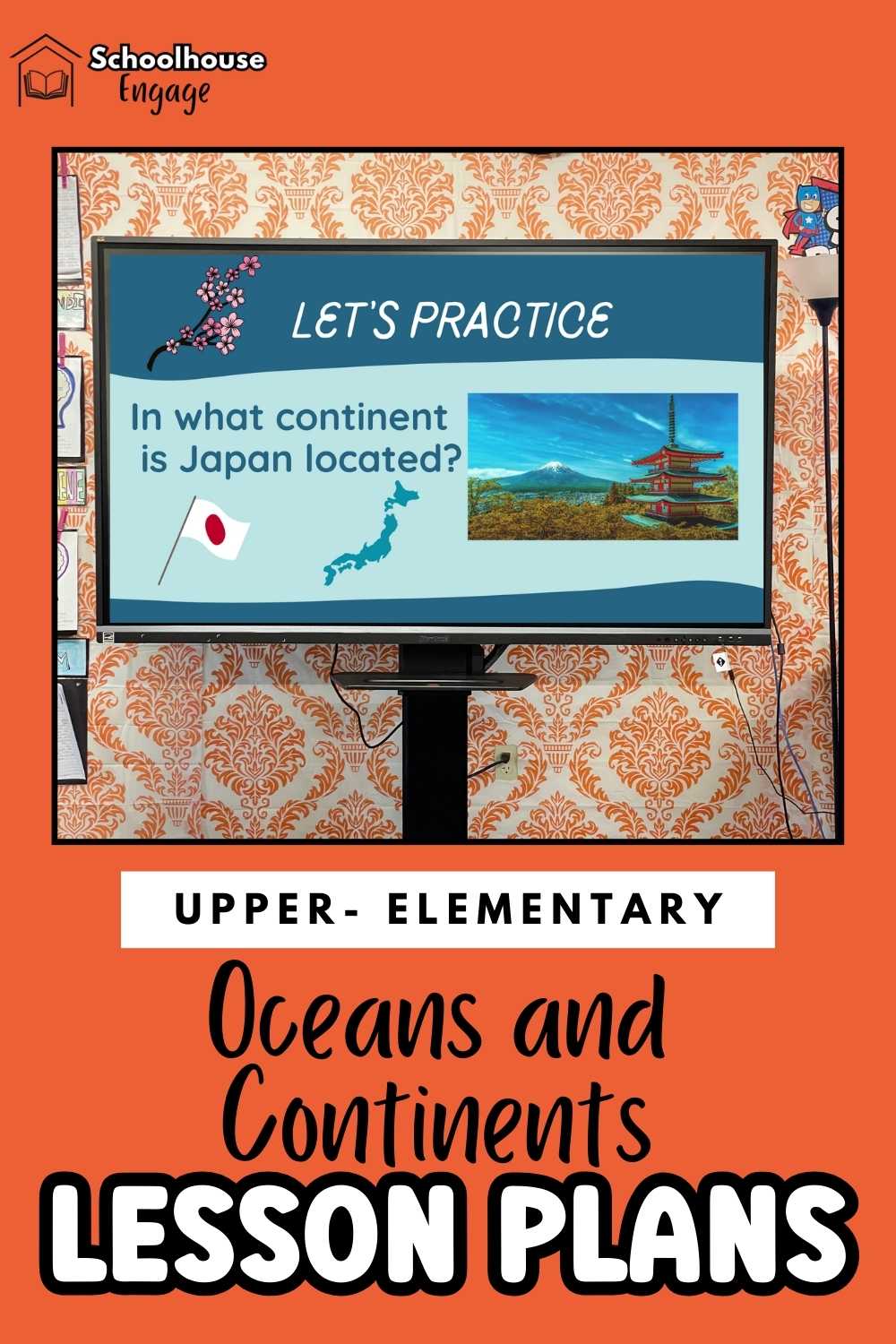
I created a Google Slides Presentation to show students images of each country while they take guided notes. These guided notes are great because they hold students accountable while you are teaching, and they are notes your students can refer back to.
They glue these notes in their Social Studies notebook and have them for the whole year. When we are done with the lesson, we do an activity called Write the Room. Please read my blog post to learn how I use this strategy in all subject areas.

To boil it down, students basically walk around the room answering questions I post on the wall. I have a set of Write the Room geography questions already created. This is a great activity to test your students’ knowledge and get them talking about geography because they work in pairs.
#3 Make Geography Fun with Games
Jeopardy
Making geography fun is easy when you play a game. Whenever you say, “We are going to play a game”, it’s an instant attention grabber. Here are a few ideas:
Split your class up into teams and show them slides with questions like: “In what continent is Italy located?” Give them 10 seconds to answer the question. When time is up, they get a point if their answer is correct. If not, the other team has an opportunity to answer. The team with the most points wins!
Jeopardy Labs is a free website with Jeopardy games already created. I use this one in my class, and it’s perfect for 5th-grade students.

This isn’t a game per se, but my students have to come up with 10 questions to ask their partner. Be sure to give examples like: What country is north of the United States? Or what ocean borders Europe? They are allowed to use their Social Studies books or the computer to come up with questions.
Once they have written all their questions, they have about 5 minutes to work with a partner to ask them their questions.
Silent Geography Ball
Another fun game to play is Silent Ball- Geography Version. Here’s how to play:
- Set Expectations
- All players sit on top of their desks. (They love this!)
- Absolutely no talking or noise.
- Start the Game
- Choose one student to begin by tossing a soft ball (like a foam ball or plush toy) to another student.
- When someone catches the ball, they must say the name of a continent, ocean, or country within 3 seconds.
- Out Rules
A player is out if they:- Say a continent, ocean, or country that was said right before they catch the ball
- Talk, giggle, or make noise.
- Drop the ball when it was a good throw.
- Make a wild or unsafe throw.
- Take more than 3 seconds to answer
- Continue Until One Winner
- The game keeps going until only one student remains.
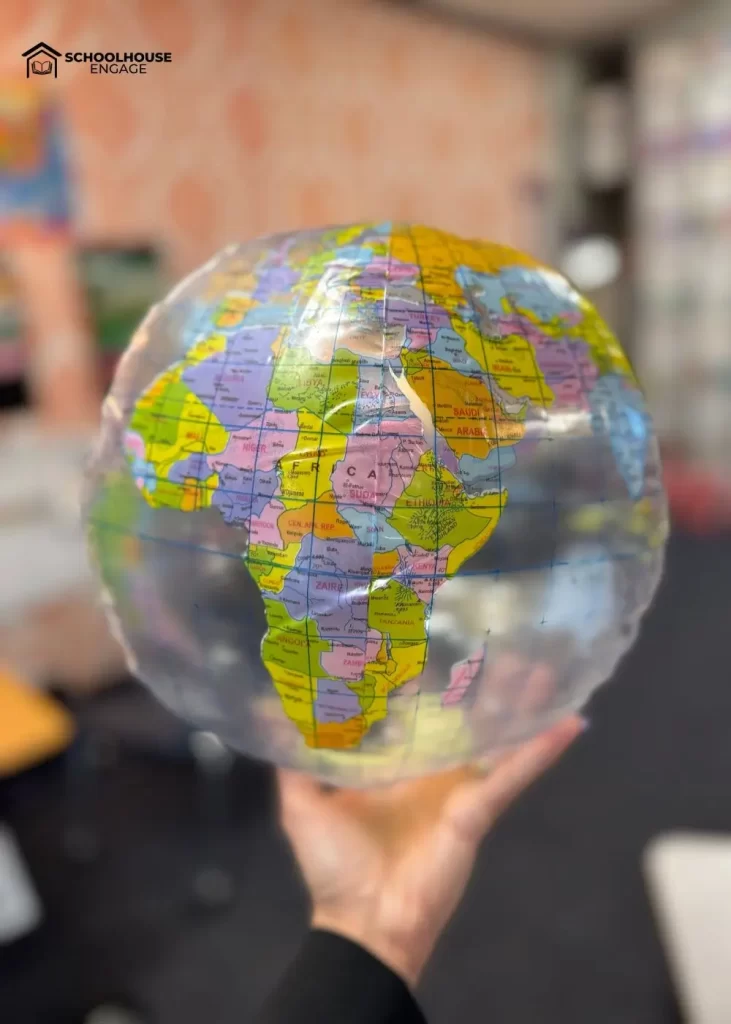
It’s a pretty basic game, but the kids love it, and it gets them recalling all the information they have learned about geography. You can use any ball, but we use the one in the picture below that I found at the Dollar Tree. It’s similar to a beach ball, and it looks like a globe.
#5 Wrap Up with a Geography Quiz
End your unit with a simple geography quiz to reinforce learning. I like to start with a digital practice quiz and follow up with a paper version where students label the 7 continents. It’s a quick check that holds them accountable.

However you decide to teach your students geography, just remember that you are empowering your students with a solid foundation of some fundamental knowledge. You got this! Giselle