
If you’ve ever thought, “I should make an anchor chart for the causes of the American Revolution…” and then immediately realized you’d have to actually draw it… you’re not alone.
I’ve been there. And honestly? That’s exactly why I created this free resource.
I wanted a way to build a clear, visual timeline with my students without spending extra time sketching everything out (because let’s be real—drawing neat, meaningful visuals on the fly is not my strength).
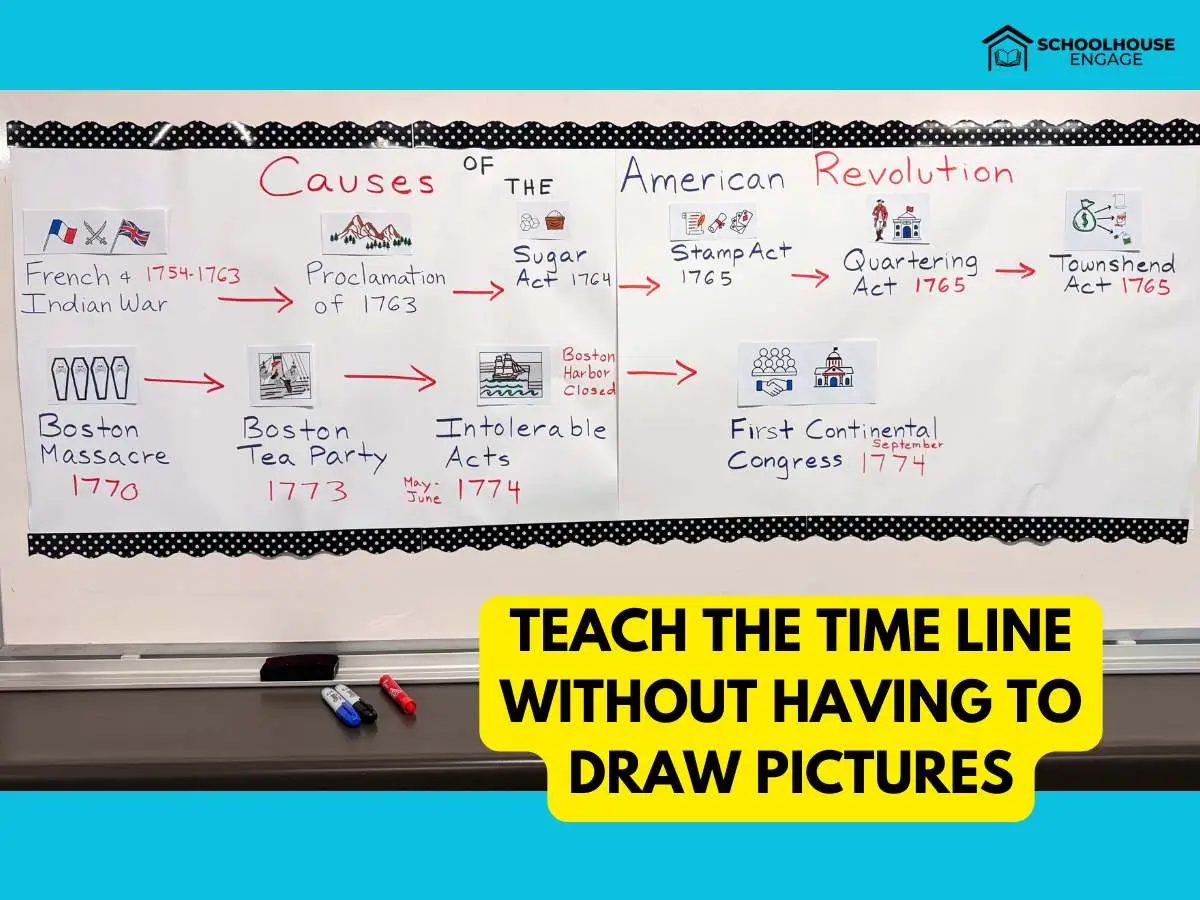
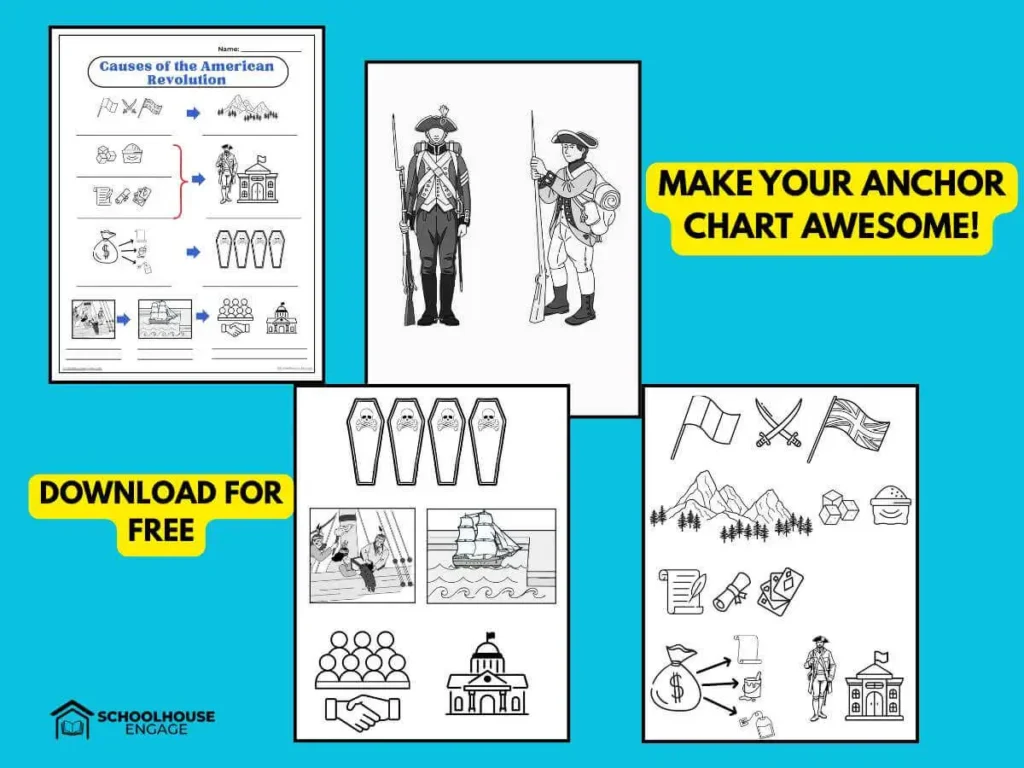
So instead, I use ready-to-print images to build a timeline anchor chart with my students as we learn.
How I Build My American Revolution Timeline Anchor Chart
As we move through the causes of the American Revolution, I introduce each event in order and add it to our class timeline.
Here’s what that looks like in my classroom:
- I print the images ahead of time (sometimes I color them, sometimes I don’t—depends on the week!)
- As I teach each event, I add the image to our anchor chart
- Next to each image, we write:
- The name of the event
- The year it happened
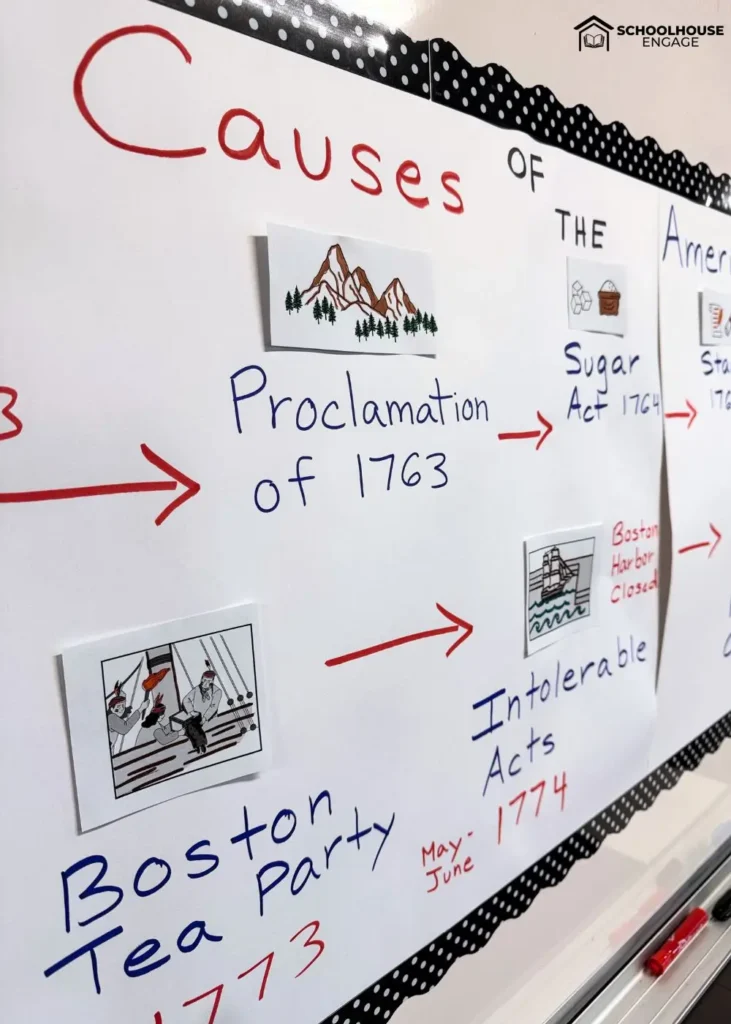
The visuals make a huge difference. For example, when we talk about the Proclamation of 1763, students connect it to the image of the mountains, which helps them actually remember what it means.
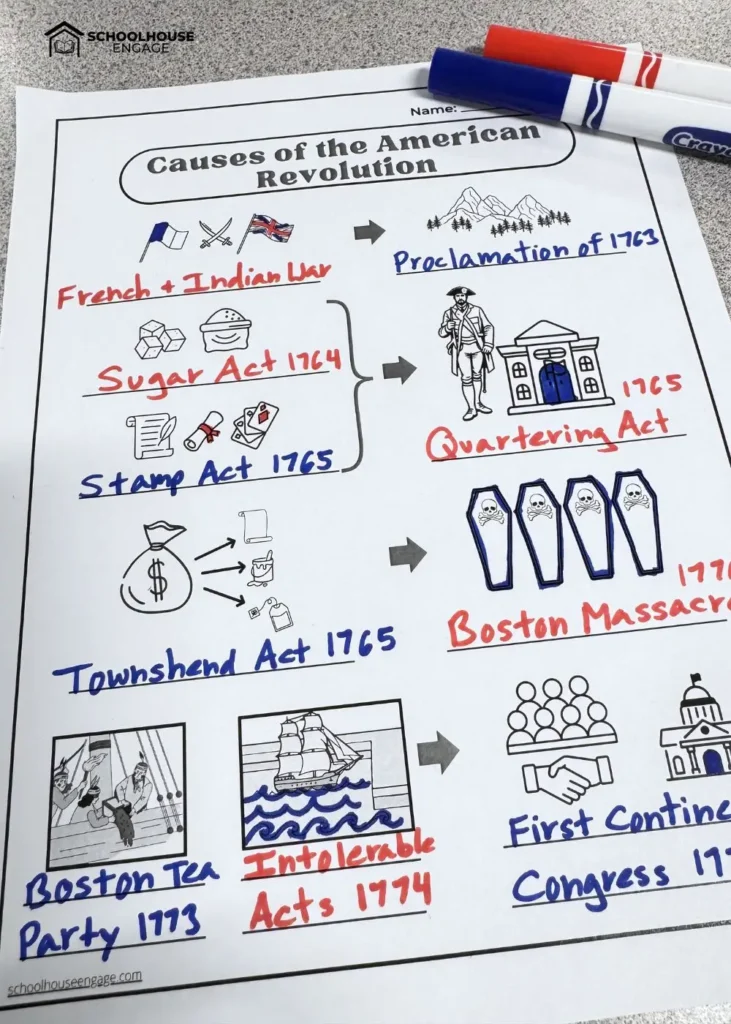
At the same time, students are building their own timeline using the included recording sheet. As we go, they write down each event and the year, so they’re not just watching—they’re actively involved the whole time.
It turns the lesson into something interactive instead of just notes and lecture. I make sure to create this timeline as we are simultaneously reading Readers Theater plays of the Causes of the American Revolution. Make sure to read How to Teach Causes of the American Revolution Using Reader’s Theater.
My Loyalists vs. Patriots Anchor Chart
Once we’ve built our timeline, I like to shift into helping students understand the different perspectives during the war.
This is where I create a Loyalists vs. Patriots anchor chart, and it always leads to really good discussions.
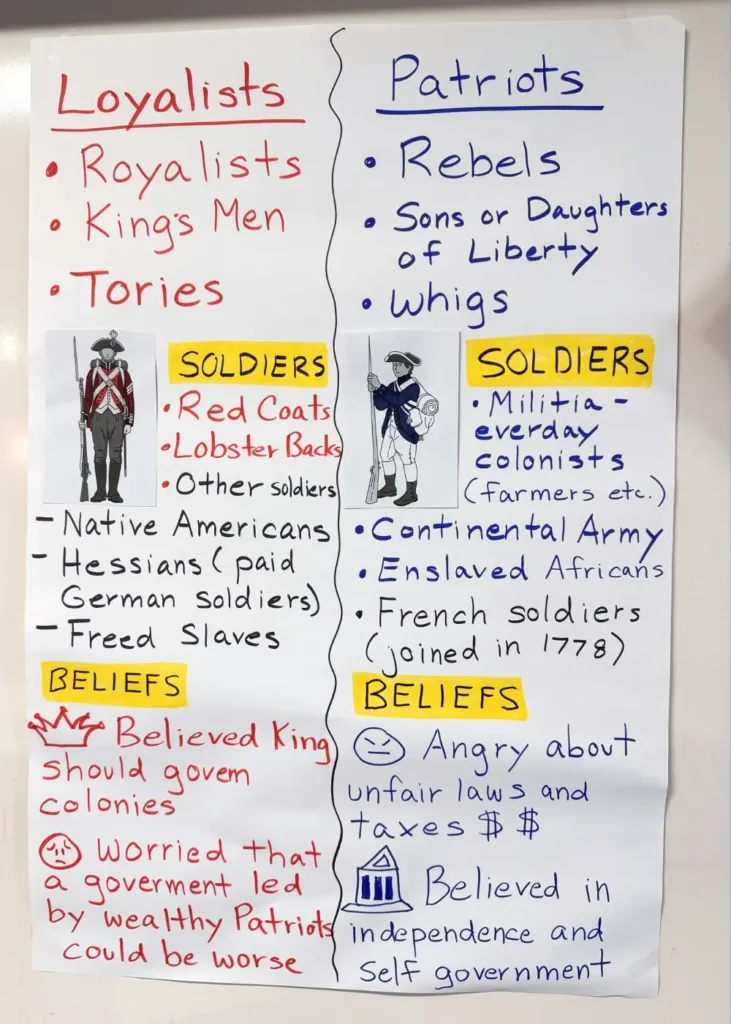
We start by talking about what each group was called:
Loyalists:
- Lobsterbacks
- Redcoats
- King’s Men
Patriots:
- Whigs
- Rebels
Then we talk about who was actually fighting on each side.
This part is always eye-opening for students.
Loyalists included:
- British soldiers
- Paid soldiers like the Hessians (German soldiers)
- Freed slaves who were promised freedom
- Some Native American groups
Patriots included:
- The Continental Army
- Militia (everyday colonists like farmers)
- Enslaved people who fought for freedom
- The French (who joined in 1778)
From there, we dig into their beliefs, which really helps students understand why people chose different sides.
- Loyalists believed in staying loyal to the king and that Britain had the right to govern the colonies
- Patriots believed the colonies should govern themselves and that British policies were unfair
This anchor chart helps students see that it wasn’t just “good vs. bad”—it was people making decisions based on their situations, beliefs, and opportunities.
Why This Works So Well
I’ve used this approach for years, and it consistently helps students:
- Understand the sequence of events leading to the Revolution
- Make connections between cause and effect
- Stay engaged because they’re actively building something
- Actually remember the content (those visuals really stick!)
And bonus—your classroom ends up with anchor charts that look great for Open House or Showcase Night without you having to stress over drawing them.
Want to Try It in Your Classroom?
I’ve put all of these timeline images together into a free resource you can use right away.
You can grab it by entering your email below, and I’ll send it straight to your inbox:
It includes:
- Ready-to-use timeline images
- A student recording sheet
- Visuals you can also use for your Loyalists vs. Patriots anchor chart
If you try this out, I’d love to hear how it goes in your classroom. This is one of those lessons that just clicks for students, and it makes teaching the American Revolution so much more manageable.
Make sure to read:
The Ultimate Guide to Teaching the Causes of the American Revolution
Hands-On Activities to Teach the Causes of the American Revolution
You’ve got this. Giselle