
Teaching Earth’s spheres (hydrosphere, atmosphere, geosphere, and biosphere) can feel like a lot of vocabulary for upper elementary students to absorb. But when students can see the science happening, the concepts suddenly make much more sense.
Over the years I’ve found that the best way to teach Earth systems in 4th and 5th grade is by combining simple science demonstrations with hands-on note-taking activities.
Today I’m sharing a few easy Earth science experiments for the classroom that demonstrate each of Earth’s spheres. These activities are simple, inexpensive, and highly engaging for students.
And the best part? You don’t need a science lab or expensive materials.
Hydrosphere Activity: How Clouds Form
The hydrosphere includes all of the water on Earth—oceans, rivers, lakes, groundwater, and even water vapor in the air.
One of the most exciting ways to introduce the hydrosphere is by showing students how clouds form.
Cloud in a Bottle Experiment
Clouds don’t just appear in the sky. They form because of changes in pressure and cooling in the air.
This cloud in a bottle demonstration is one of my favorite science activities because students are always amazed when the cloud suddenly appears.
To demonstrate this:
- I pour a small amount of water into a plastic bottle.
- I drop a match inside the bottle.
- A student quickly closes the bottle.
- Students squeeze the bottle and then release it.
When the pressure changes inside the bottle, a cloud forms inside.
I usually demonstrate it once for the whole class first. Then I give each group a bottle so they can try squeezing it themselves. It sounds pretty simple, but they love it.
After the demonstration, students record what they learned in their Hydrosphere Foldable, which helps them organize important ideas about Earth’s water systems.
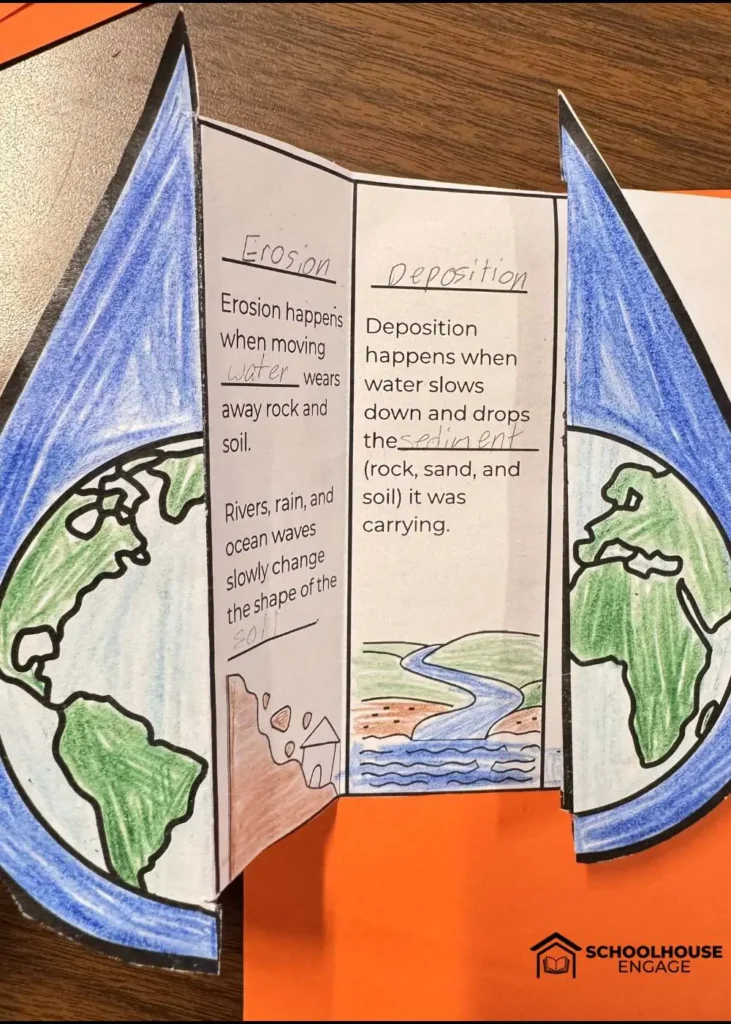
Geosphere Activity: Demonstrating Erosion
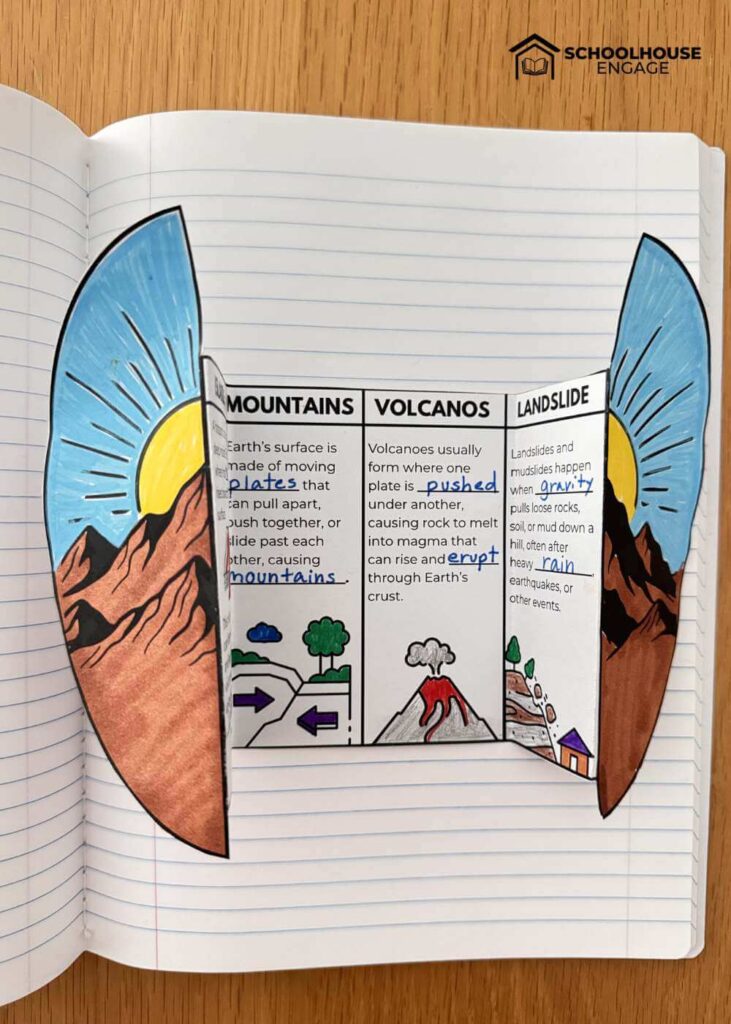
The geosphere includes the solid parts of Earth like rocks, soil, mountains, and landforms.
A quick way to help students understand how landforms change is by demonstrating erosion.
Erosion Demonstration
For this activity, I randomly choose a volunteer to create a small hill out of dirt, and I have them walk around so students can observe what the hill looks like before a thunderstorm hits. Then another student slowly pours water (rain) over it in front of the class using a water dropper or a straw, and again walks around the classroom.
Students immediately see the water begin to carry soil downhill, creating little channels in the dirt. It’s a simple experiment, but kids really do like seeing these demonstrations.
This simple demonstration helps students visualize how water can shape landforms over time.
Afterward, students record key information about rocks, soil, and landforms in the Geosphere Foldable.
Atmosphere Activity: Can We Make It Rain?
The atmosphere is the layer of gases surrounding Earth, and it’s responsible for weather.
One demonstration that students love shows how rain can form when warm air meets cooler air.
Rain Formation Demonstration
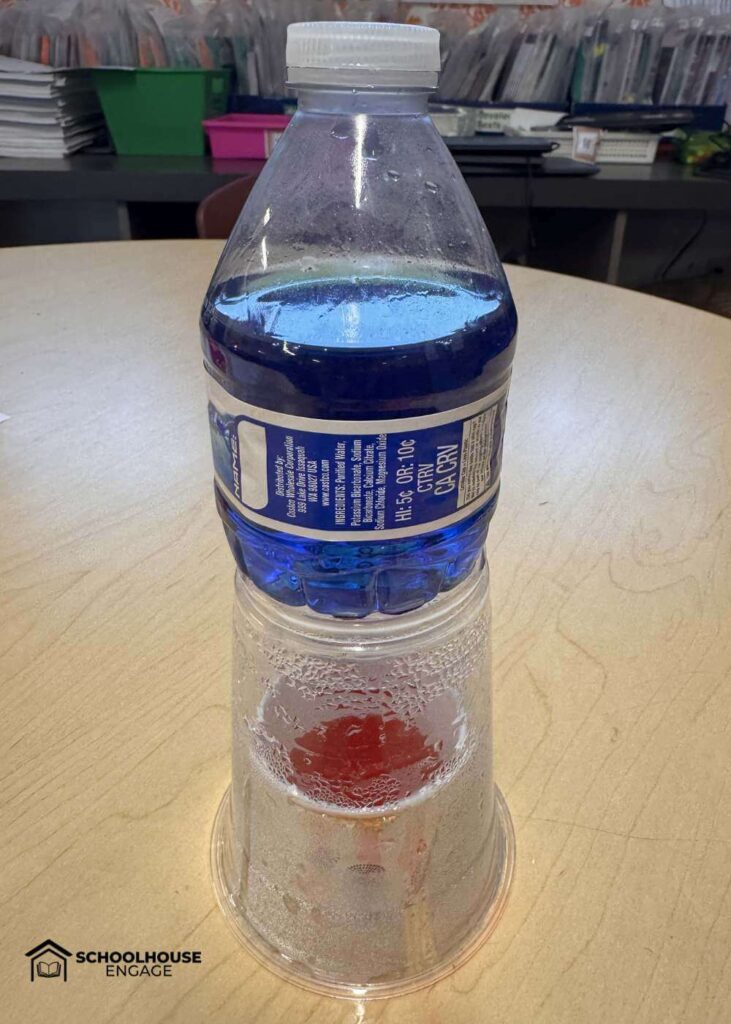
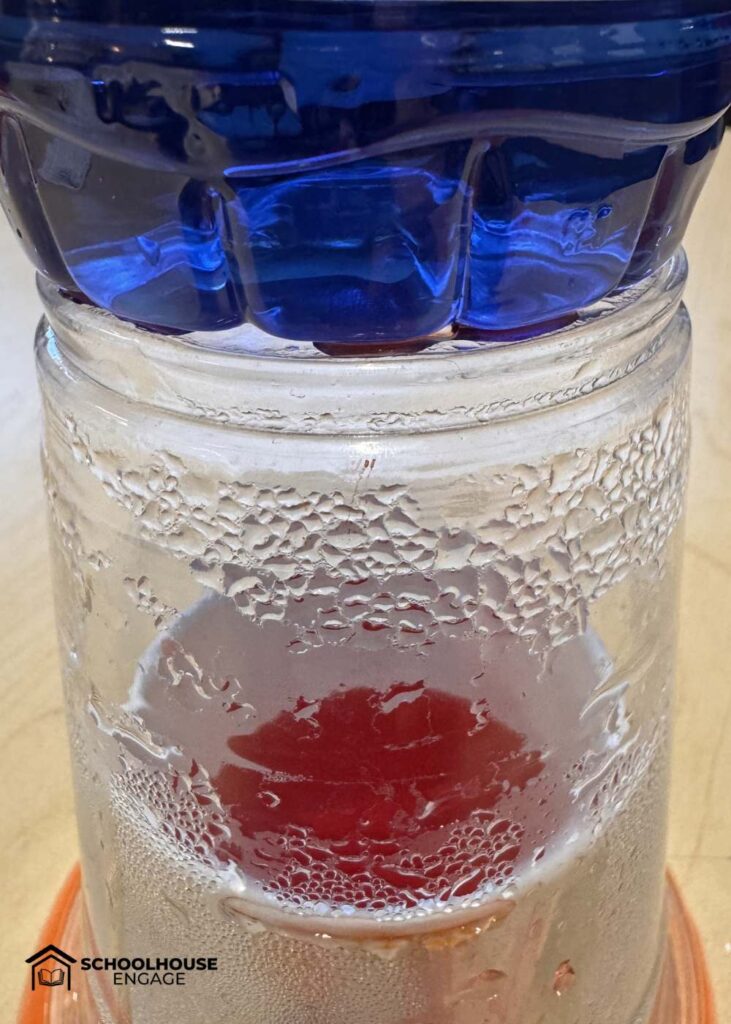
For this activity, I place a tiny cup of very hot water with red dye inside a clear plastic container.
On top of the plastic cup, I place a small, cold plastic bottle with blue-dyed water.
Students begin to see condensation forming, which models how rain develops in the atmosphere.
This demonstration is part of the Mystery Science lesson “Can We Make It Rain?” from the Watery Planet unit (Lesson 4). If you haven’t heard of Mystery Science, it is an online science curriculum that is hands-on and very easy to use. Make sure to read: Mystery Science in 5th-Grade: Tips and Ideas for Implementation
If you teach the “Can We Make it Rain” lesson, I also created guided notes, vocabulary activities, and a quiz that help students review the concepts afterward.
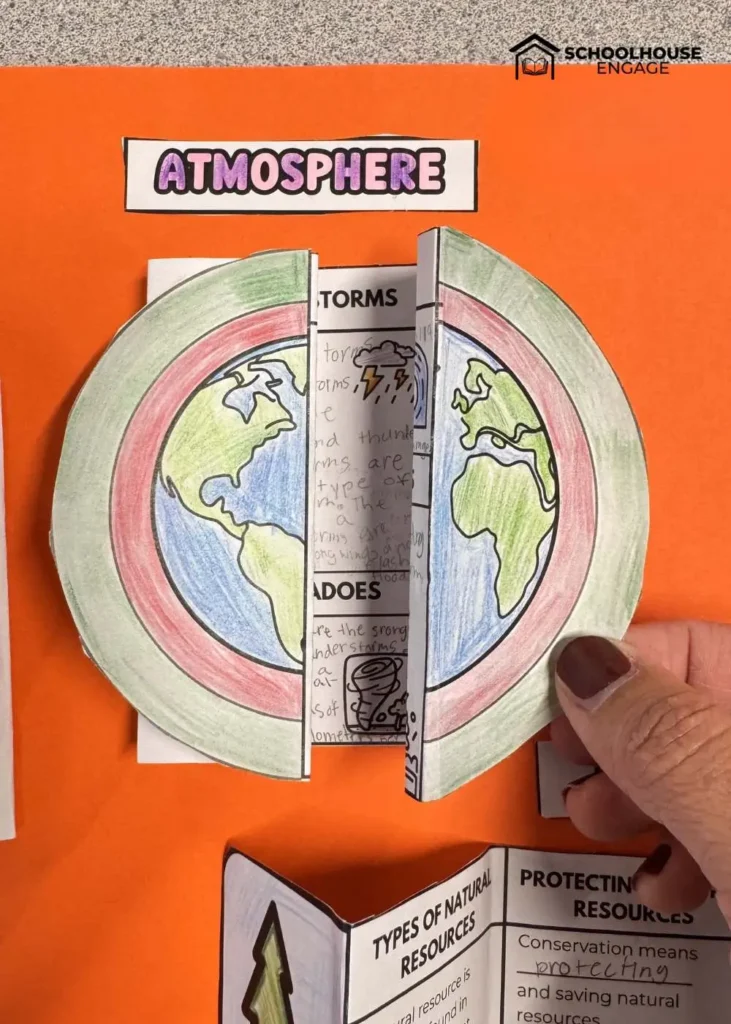
Students then complete the Atmosphere Foldable to organize what they learned about air masses, storms, and weather.
Biosphere Activity: Plant Transpiration Experiment
The biosphere includes all living things on Earth.
One easy way to demonstrate how plants interact with Earth’s systems is by showing transpiration.
Plant Transpiration Demonstration
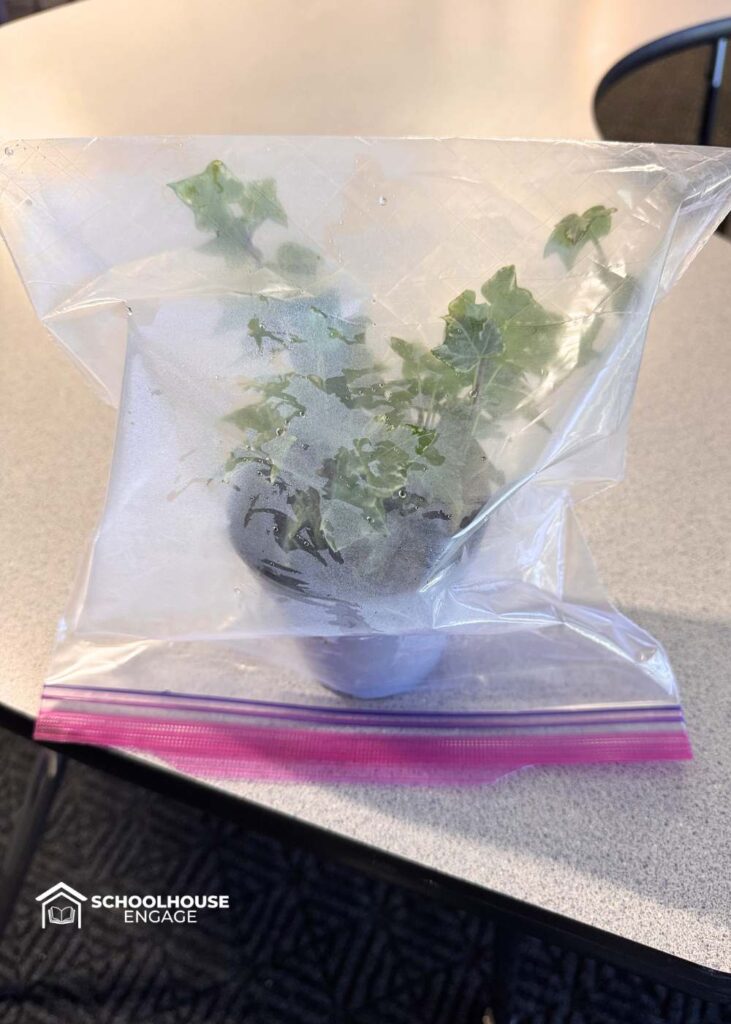
To demonstrate transpiration, I cover the leaves of a plant with a clear plastic bag and leave it there for a while.
Eventually, moisture forms inside the bag.
This helps students see that plants release water vapor through their leaves.
It’s a simple but powerful example of how plants interact with the water cycle and the biosphere.
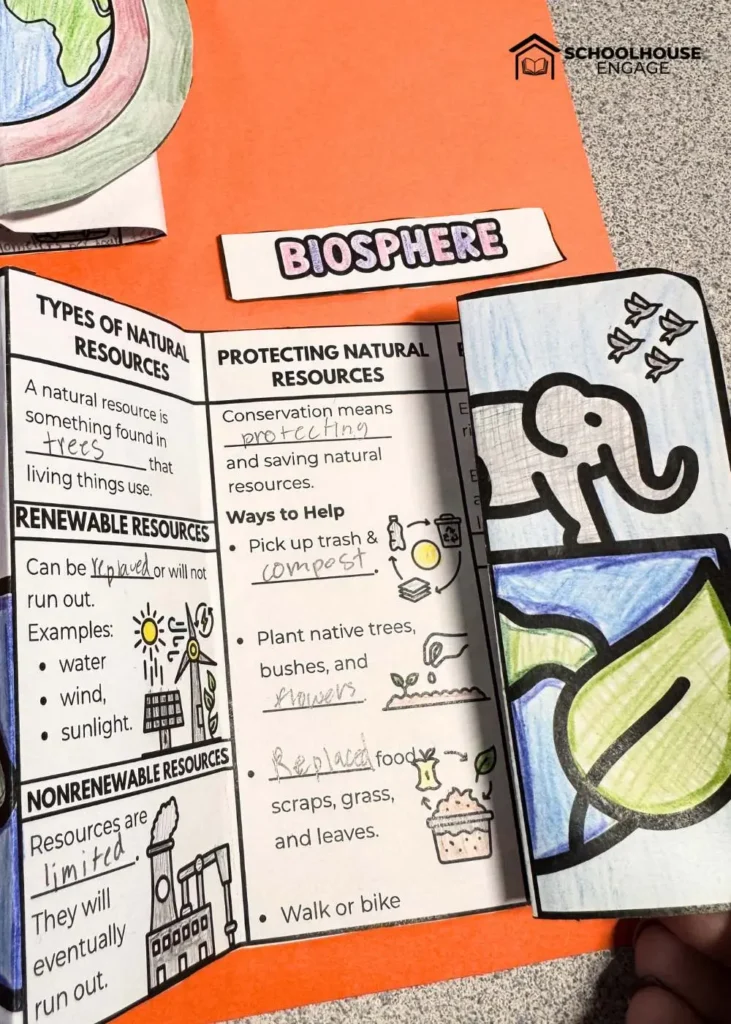
Students then record information about natural resources, conservation, endangered species, and human impact on ecosystems using the Biosphere Foldable.
When You Don’t Have Supplies for Every Student
As teachers, we sometimes feel like every science experiment should be something each student gets to do individually.
But when you have limited materials or a large class, that’s not always practical.
The good news is that demonstrations can be just as powerful.
In my classroom, I randomly choose students to help with the experiment. Sometimes they’re holding a cup, pouring water, or squeezing a bottle.
Even small roles help students feel involved.
I like to compare it to a magic show.
Magic shows are entertaining when the magician calls people up to participate—but that doesn’t mean everyone in the audience performs the trick.
The same idea works in the classroom. When a few students help with the demonstration, the whole class becomes more engaged.
Earth’s Spheres Foldable Activities for Interactive Science Notebooks
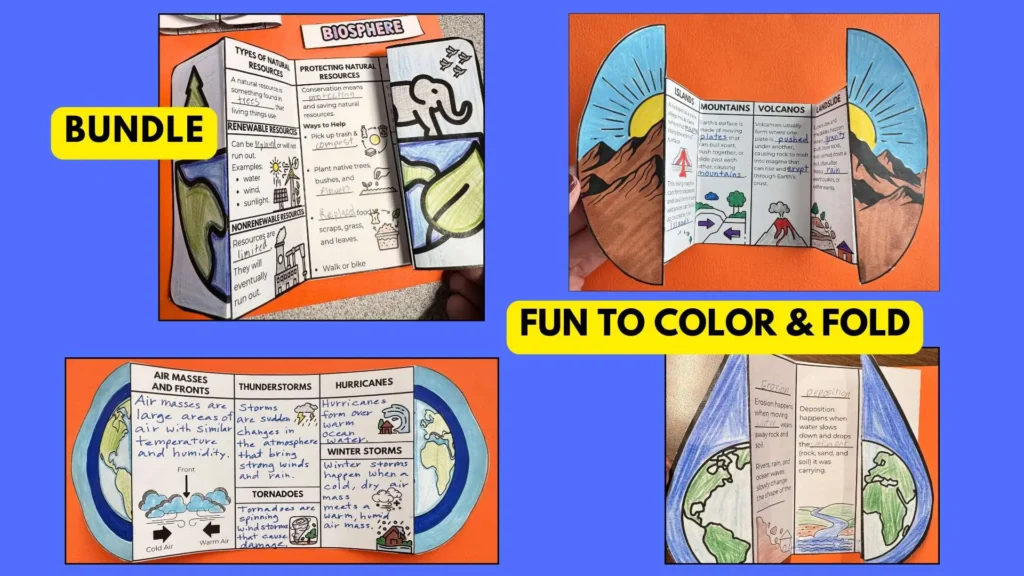
To help students organize everything they learn about Earth systems, I created an Earth’s Spheres Foldable Bundle.
These cut-and-color science foldables help students record important information about:
- Hydrosphere
- Atmosphere
- Geosphere
- Biosphere
Each foldable includes:
- a fill-in-the-blank guided notes version for extra support
- a blank version for independent note-taking
- English and Spanish versions for bilingual classrooms
Teachers love using them for:
- interactive science notebooks
- Earth systems units
- science centers
- review activities
- sub plans
If you want to take a closer look, you can check out the Earth’s Spheres Foldable Bundle here.
Simple Science Activities Students Remember
Science doesn’t have to involve complicated materials or expensive kits to be meaningful.
Sometimes the simplest demonstrations are the ones students remember the most.
When students can see science in action and then record their learning in an organized way, they begin to understand Earth science concepts.
And that’s exactly what we want. You got this! Giselle