
Teaching the Native American Unit in elementary school is one of my favorite Social Studies lessons. But with so many possible hands-on activities, the unit seems to just go on forever.
If you were to do every fun and engaging activity that goes along with teaching American Indians, you could seriously teach it for months.
In this article, I’ll share my favorite easy, low-prep, and engaging Native American unit ideas you can implement even when your schedule is tight.
Blending the Native American Unit with Your Curriculum
Besides doing the regular reading, writing, and vocabulary activities in our TCI Social Studies Alive book (which I love, by the way), I also like to mix in some of my own activities that I have done throughout the years.
Terminology note: I will use the words Native Americans and American Indians interchangeably, since both are accepted terms. (Note: adjust according to your students’ cultural context and sensitivity.)
Fun fact, I’m 20% indigenous Puerto Rican (Taíno), so I’m part Native Caribbean! Yeah!!
Hands-On Native American Activities Students Love
1. Basket Weaving Craft
Teach the Importance of Basket Weaving
Before starting, introduce the cultural significance of basket weaving. American Indian tribes across North America used basketry for storage, ceremonies, and trade. From the Hopi and Navajo in the Southwest to the Cherokee in the Southeast, each region developed unique patterns and materials.
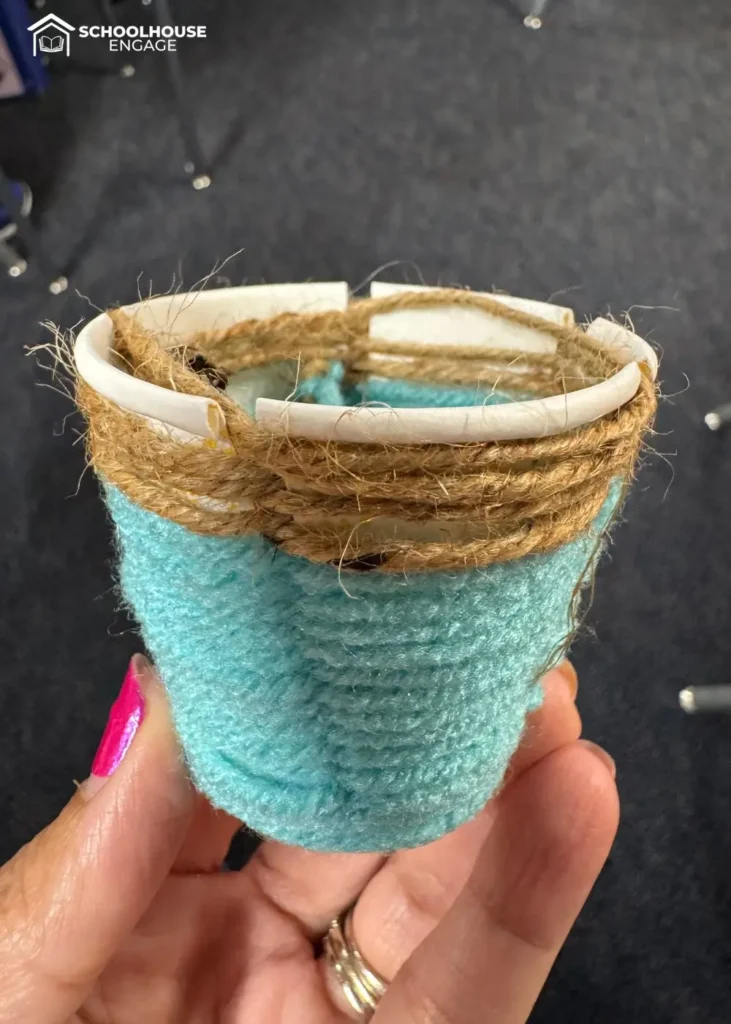
Materials
- Small Dixie cups
- Scissors
- Glue
- Yarn
Directions
- Cut each Dixie cup vertically into 5 equal strips, leaving the base intact.
- Glue yarn around the bottom three times.
- Weave the yarn in and out of the strips until you reach the top.
- Finish by gluing the yarn.
This simple weaving craft isn’t messy, and gives students a real appreciation for traditional Native American artistry.
2. Create a Loom Using Cardboard and Weave a Small Blanket
Tribes in the Southwest and Northwest Coast were known for their intricate blankets. The Navajo became famous for their woven rugs, while the Tlingit designed ceremonial blankets representing clan identity.
Materials
- Cardboard (8″ x 5″)
- Yarn (various colors)
- Scissors
Directions
- Cut eight small slits at the top and bottom of the cardboard.
- Wrap yarn through the slits to create the loom.
- Demonstrate the over-under weaving pattern.
- Encourage students to add color changes by tying on new yarn.
Teacher Tip
If you can, have a parent volunteer pre-cut yarn pieces. Keep a class set of cardboard looms in a plastic bin and reuse them every year.
This activity requires a lot of prep initially, but I think it is worth it. If you don’t have help or time to prepare the yarn for each student, then place a ball of yarn on each desk and have students cut the pieces themselves.
My students really enjoyed this activity. They asked if they could take the cardboard home and make another one. By the way, I said no, and you should too!
Here’s why: In the past, students didn’t return my cardboard looms, and I like to keep a classroom set for future projects. It can be a pain to always have to replace them.
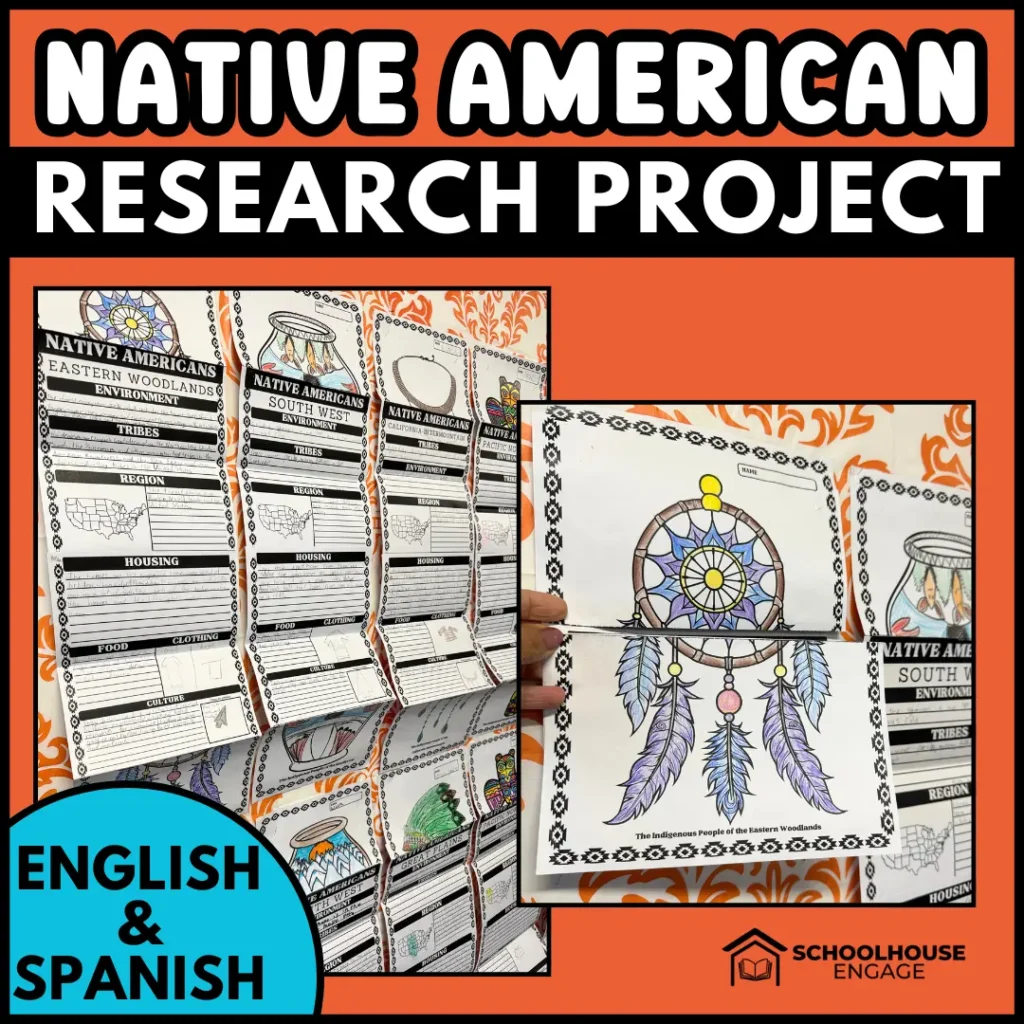
American Indian Region Foldable Report
Let students choose a Native American region to research—choice boosts engagement! Students then create a foldable report.
Research Topics
- Tribes of the region
- Environment and geography
- Housing and clothing
- Food and traditions
- Cultural artifacts
Students use a note-taking page first, then complete their foldable report with writing and drawings. Download the note-taking pages for free below.
These reports look fantastic on bulletin boards and add a splash of color to your Social Studies displays. Students love to color, and it’s a fun way for students to be creative without the time-consuming task of completing actual hand-written drawings.
You can find my printable Native American Region Report template in my Teachers Pay Teachers store—it includes everything you need for research and note-taking, and it’s available in English and Spanish.
Make a Pictograph Story
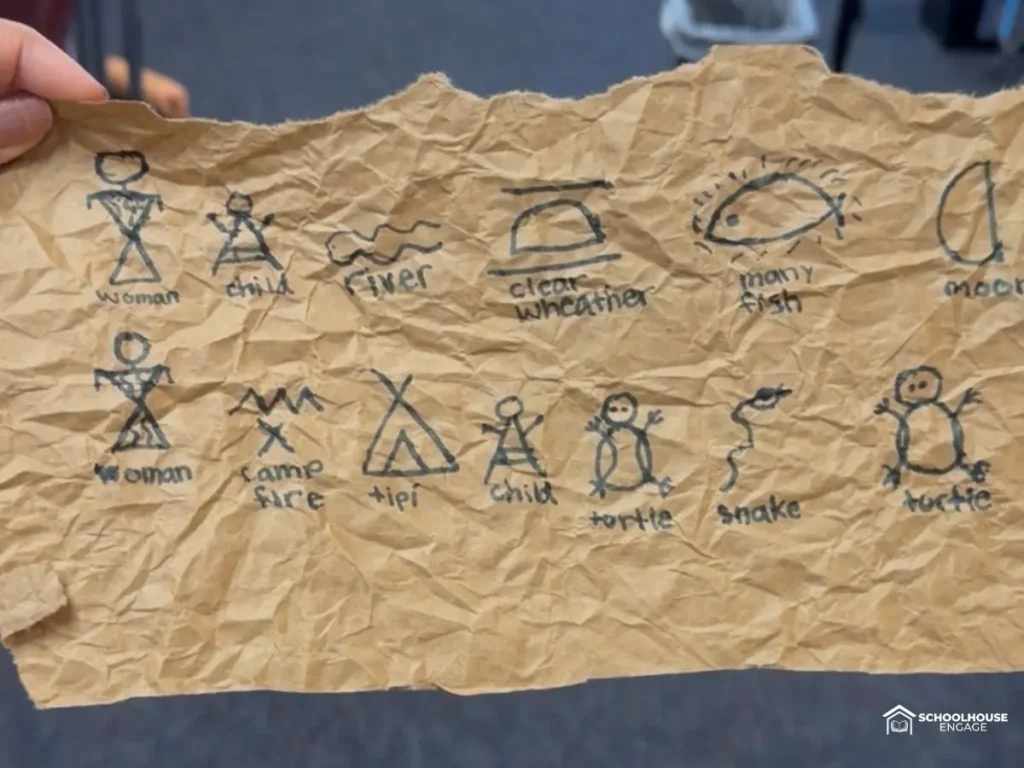
After reading about pictographs in Social Studies Alive, have students create pictographs of their own lives.
Activity Steps
- Discuss how American Indians used pictographs to record stories.
- Have students crumble up brown paper bags or brown construction paper to mimic hide.
- Students draw symbols representing their own key life events or a story.
- Have them write a short paragraph explaining their pictographs.
This simple project connects art and writing, and it helps students visualize how early communication systems worked.
Read Native American Multisyllabic words
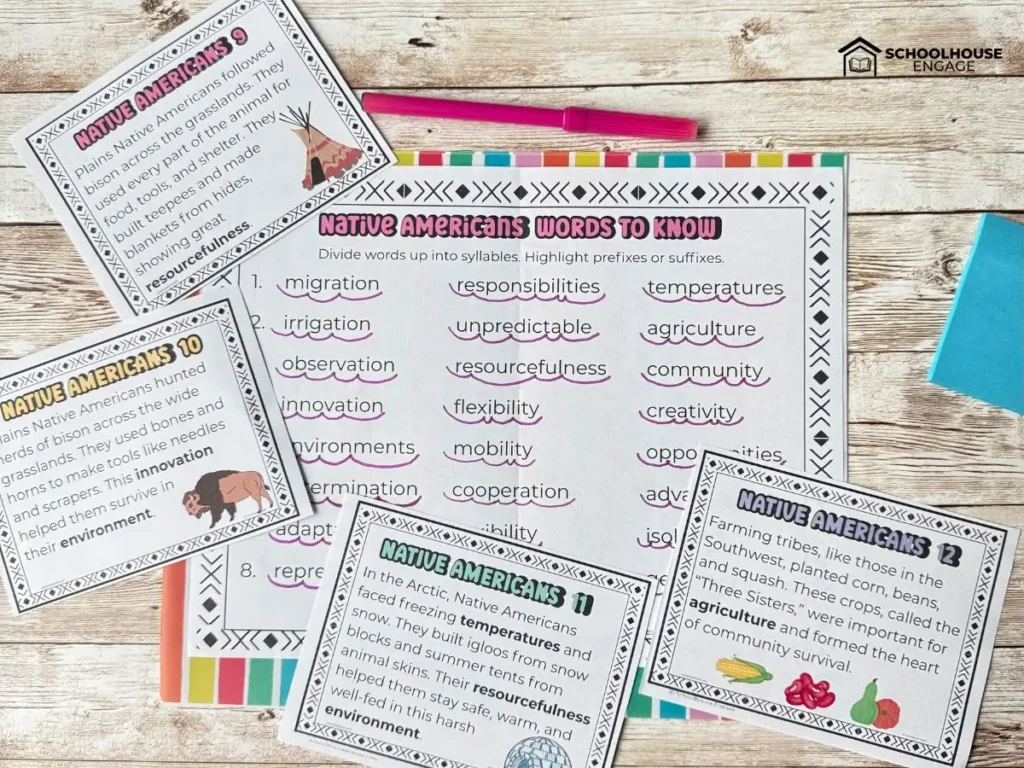
Integrate literacy with Social Studies by practicing fluency using multisyllabic Native American-themed words. My students love reading the Native American Fluency Task Cards because they combine vocabulary practice with fascinating content.
What’s Included in These Cards
- Short passages featuring bolded Native American content words
- Picture support to connect meaning
- Frontloaded word lists with prefixes, suffixes, and syllable breaks
This is a fun, quick way to build fluency, reinforce content vocabulary, and strengthen decoding skills—all while reviewing Social Studies material. Get them HERE.
Opinion Writing: Correcting Misconceptions
The last culminating activity that we do is write an opinion essay. Social Studies Alive gives them a prompt about a movie director who is creating a movie about the Native Americans in the northwestern region.
The movie director is featuring Native Americans, wearing feathered headdresses and living in teepees. Students have to write an opinion essay letting the movie director know that he or she is incorrect about the clothing and housing of the Native Americans of the Northwest region.
They need to offer suggestions on how the movie director should represent the Northeast Native American in the film.
This activity encourages critical thinking and cultural understanding while integrating Social Studies content into writing.
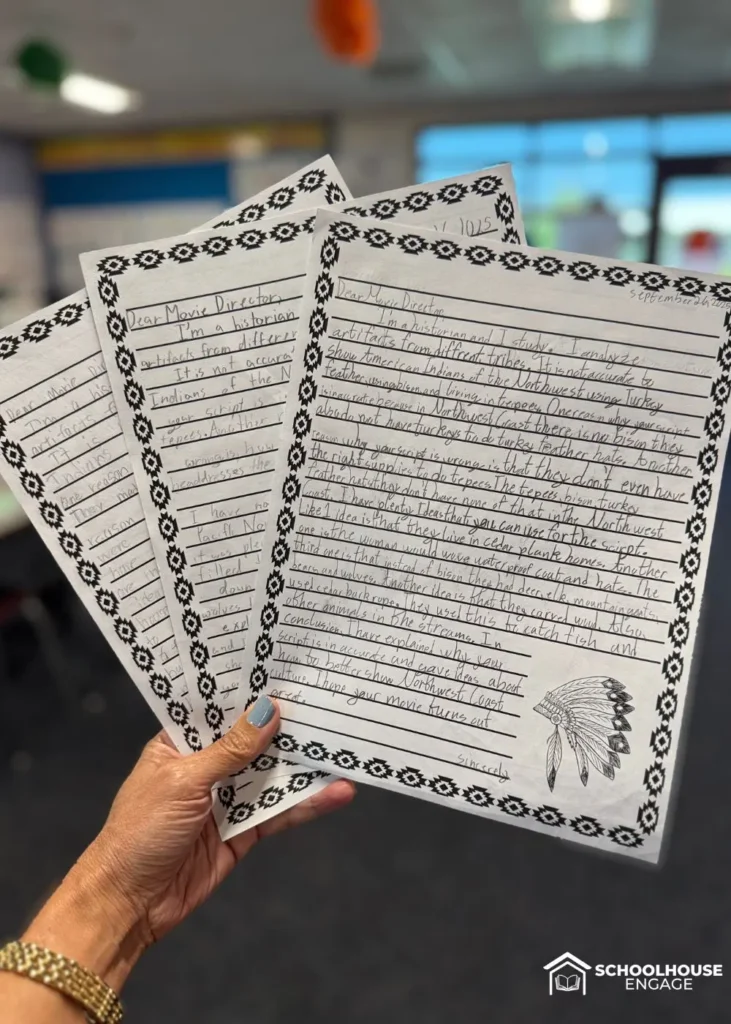
I really like this prompt because it makes students synthesize all the information they’ve learned and apply it to an opinion writing piece.
Engaging, Low-Cost Native American Unit Ideas
It’s important to pick and choose the most engaging activities that are easy for you to implement and are easy on the wallet.
Because we all know how much of our own money we spend on crafts and hands-on activities. All of the ideas I’ve given you are low-cost, and the materials are easily found. By the way, always ask parents for donations before you head to your wallet.
Conclusion: Bringing History and Literacy Together
Teaching about Native Americans gives students an appreciation for the culture of the different American Indians—and with these easy, low-prep activities, your Social Studies lessons can be both meaningful and fun.
If you’re looking for ready-to-use resources to extend your unit, check out my:
Native American Multisyllabic Fluency Task Cards – perfect for building reading fluency and vocabulary through content-rich passages.
Native American Region Report Project – a printable research and writing activity that makes Social Studies displays shine.
Both are classroom-tested and designed to save you time while deepening your students’ understanding of Native American history.
You got this! Giselle
To read more about how I incorporate ELD for my English Learners with a Native American theme, read How to Integrate Social Studies into Upper Elementary Designated ELD Lesson Plans