
Do your students write European Explorer reports? I always felt that a good culminating activity for our Age of Exploration Unit was for my students to choose a European Explorer to write about, using a template to guide their research.
Researching and writing a report isn’t very fun for many students, so I created a report that combines a coloring project to make it more engaging.
Build Background Knowledge with Interactive Lessons
To build background knowledge of the journeys European explorers endured, we discuss what sailors had to go through on their voyages. We also read passages with vocabulary slides. I always get a kick out of showing students how sailors’ teeth used to look if they had scurvy.
We read about some of the most famous explorers, and students learn about the trials and tribulations they endured on their expeditions.
By the end of the unit, they are ready to write a report and publish it in a creative way. This is a traditional writing assignment many teachers give, so I added some pizazz to it by making it an easy but fun project.

How to Implement This Explorer Project
Step 1: Choose or Assign an Explorer
Assign explorers or let students select from an included list.
Step 2: Gather Research from Reliable Resources
Provide students with a curated list of age-appropriate websites and books for research. My students are required to check out one book from the library about their explorer. They are permitted to use the following websites for their report.
Encyclopedia Britannica Elementary
They are also allowed to use one educational video on YouTube about their explorer.

Step 3: Guide Students with Scaffolded Note-Taking
Students should complete their note-taking pages before they work on their final report templates. The note-taking pages are their rough draft; my students took about two days to complete them. You can download them below.
Once they were done taking notes, I handed out the final report template. If you hand out everything all at once, most likely, they will misplace their papers. So, hand out materials as you go.
Step 4: Assemble the Report
Model step-by-step how to assemble their project.
- Glue the two pieces of the report together.
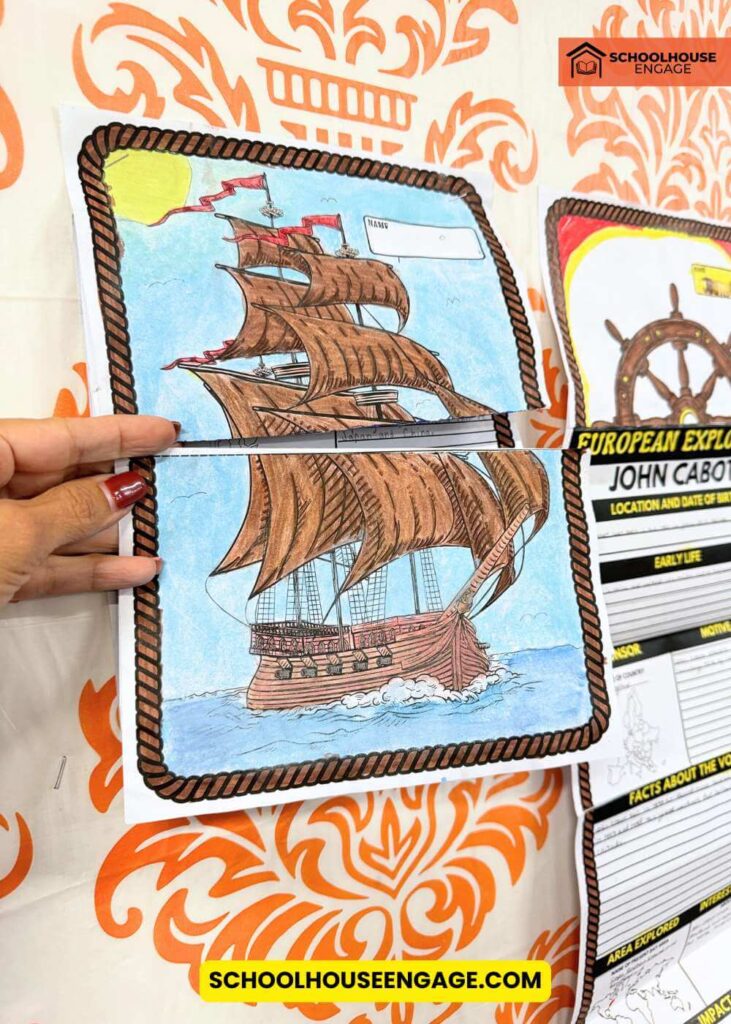
- Color and cut the cover image
- Glue the cover image on the parts labeled “Glue.”
- Fold the cover images down so the report can open up
You can also show your students the video below.
Step 5: Students Choose or Assign Covers
You can offer students creative freedom by letting them choose their cover, and then print the amount you need. Another option is to simplify the process by assigning a cover design to students.
Your bulletin board will look great if you have a variety of report covers. So you can print all the covers equally, and then ask your students, “Who would like the compass cover?” and I pass them out accordingly. Continue with the other covers by asking students who wants what.
If more students want the same cover than what is available, I just tell my students, “You get what you get, and you don’t get upset.”
Play Music from Pirates of the Caribbean While Students Work
While students work, I play music from the Pirates of the Caribbean. This is instant engagement for students since it reminds them of pirates.
Make sure to mention the dangers of sailing into unknown waters.
We discuss the effects of scurvy, and I show pictures of how sailors’ teeth would look after sailing for months without Vitamin C. Who knew citrus fruits were so important?

What Makes This European Explorer Project Unique?
Interactive and Hands-On Learning
This project is a mix of writing, research, and visual creativity. It makes learning feel less like an assignment and more like a creative project.
Students get to color, glue, and fold the project so that it folds up.
Bilingual Templates in English and Spanish
If you teach in a classroom with multilingual students, chances are some of your students are Spanish speakers. This project has fully editable templates in both languages.
From time to time, I will have a Newcomer student who doesn’t know any English at all. So allowing them to work on a project in their language gives them confidence and an opportunity to show their writing skills in their language.
If you teach in a Spanish immersion setting, this project will fit right into your curriculum.
Scaffolded Note-Taking for Every Learner
Writing a report can seem daunting for struggling writers or for students who are limited in English, so this project has scaffolded note-taking pages. The pages come with sentence frames that guide students in their research.
Integrating Social Studies and ELA
As teachers, we are so limited in our time, so if we can teach ELA and Social studies at once, it’s a win-win. This European Explorer report reinforces critical thinking and language skills while exploring history.
Encourage Thoughtful Discussion About Colonization
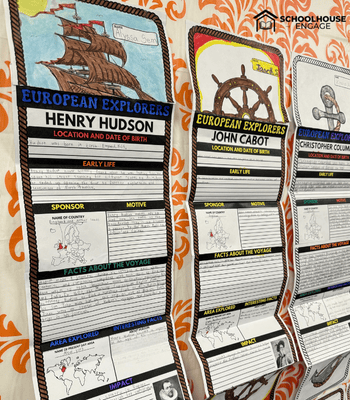
This European Explorers report only has a small image of the explorer because in no way do I think that European Explorers should be celebrated. This decision respects the perspective of Indigenous people who were brutally treated by many explorers.
During your European Exploration unit, it’s critical that you have conversations with students about colonization, indigenous cultures, and the impact of the voyages the explorers took.
Students are asked to choose and research the impact of their explorer using the following effects of colonization:
- Claimed land for a country in Europe
- Enslaved, killed, or abused Indigenous People
- Provided new information for cartographers
- Spread disease
- Established a colony or settlement
- Increased interest in trade
Showcase Student Work on Bulletin Boards
Use for Classroom or Hallway Displays
These European Explorers reports look great on classroom or hallway bulletin boards. Posting your students’ work celebrates their hard work and learning for parents and school personnel to see.
To see more European Explorer activities I do in my classroom, watch the video below.
Final Thoughts
This European Explorer project empowers every student to connect with history in a meaningful way and allows for some creativity with coloring.
Inspire your students to learn about European Explorers while developing research and writing skills in both English and Spanish! Available now in my online store. You got this! Giselle
If you are looking for more creative projects related to European Exploration, be sure to read: